



The final hours before a major exam can feel like a chaotic race against time, often filled with last-ditch cramming and mounting anxiety. But what if you could transform the night before a test from a source of stress into a strategic advantage? This guide moves beyond generic advice, offering an evidence-backed checklist designed to optimize your cognitive function, reduce anxiety, and ensure you walk into the exam room calm, confident, and prepared. It's about working smarter, not harder, in those crucial final hours.
Think of this checklist as the final, critical phase of your preparation. To truly master your exam eve, it's essential to build upon a foundation of the best study methods for exams, ensuring your preparation is efficient and effective. The actions you take now are not about learning new information but about consolidating what you already know and priming your brain and body for peak performance.
From brain-boosting nutrition to memory-consolidating sleep rituals, each of these steps is a deliberate action to secure the best possible outcome. Instead of feeling overwhelmed, you can follow a clear blueprint that sets the stage for success. Let's build your perfect pre-test routine.
1. Get a Good Night's Sleep (7-9 Hours)
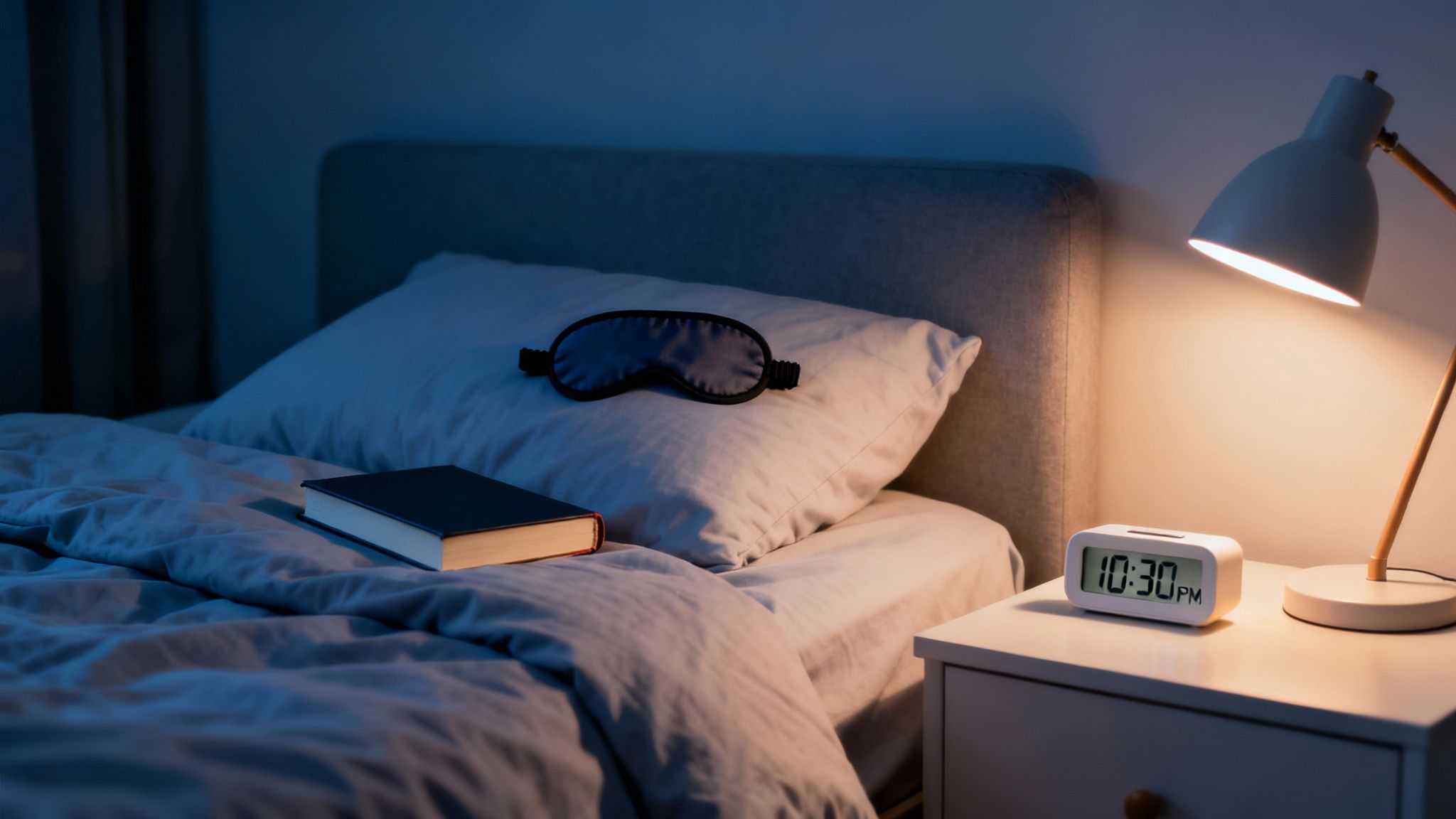
While the urge to pull an all-nighter is strong, research overwhelmingly shows that sacrificing sleep is one of the worst things you can do the night before a test. Sleep isn't a passive activity; it's when your brain gets to work consolidating memories. During deep sleep, the brain strengthens neural connections, transferring information from short-term to long-term memory, which is critical for recalling facts and concepts during your exam.
Why It Works: The Science of Sleep
A well-rested brain functions at a higher level, enhancing focus, critical thinking, and problem-solving abilities. Studies consistently back this up:
- Harvard University research found that students who consistently got a full night's sleep performed better on tests and had higher GPAs.
- University of California studies revealed that sleep-deprived students perform at a level similar to someone who is intoxicated, with impaired judgment and slower reaction times.
- Stanford University showed that even athletes who extended their sleep duration saw significant improvements in performance, demonstrating sleep's restorative power on both body and mind.
Actionable Tips for Quality Rest
Getting quality sleep is about more than just being in bed. You need to create an environment that signals to your brain that it's time to power down.
- Stick to a Routine: Go to bed and wake up around the same time, even on weekends, to regulate your body's internal clock.
- Optimize Your Bedroom: Keep your room cool (65-68°F or 18-20°C), dark, and quiet. A comfortable mattress and pillows are also key. If you are looking for an upgrade, you can check out some options for a better sleep setup.
- Digital Detox: Avoid screens (phones, tablets, laptops) for at least 30-60 minutes before bed. The blue light they emit can suppress melatonin production, the hormone that controls your sleep-wake cycle.
- Mindful Wind-Down: If you can't fall asleep, don't panic. Instead, try a guided meditation using a free app like Insight Timer or practice a simple breathing exercise, such as the 4-7-8 method.
2. Light Review (30-50 Minutes Maximum)
While it's crucial to avoid cramming, a short, focused review session can be incredibly effective the night before a test. This isn't about learning new material; it's about activating existing knowledge and boosting your confidence. A targeted 30 to 50-minute review leverages the principles of active recall and spaced repetition, signaling to your brain which information is most important to retain for the following day.

Why It Works: The Science of Active Recall
Passively re-reading notes is inefficient. A quick, active review forces your brain to retrieve information, strengthening the neural pathways and making recall much easier during the exam. Evidence strongly supports this approach over last-ditch cramming sessions:
- Cornell University research demonstrated that students performing a 30-minute active recall review the evening before a test outperformed those who crammed for three hours.
- Medical students using spaced repetition apps like Anki for brief, regular reviews saw their long-term retention improve by as much as 45%.
- A study of AP exam students found that short, daily review sessions (around 20 minutes) led to higher exam scores compared to students who relied on one long cramming session.
Actionable Tips for a Smart Review
Make every minute of your brief study session count. The goal is to reinforce, not exhaust.
- Use Active Recall Tools: Instead of reading, test yourself. Use free versions of flashcard apps like Anki or Quizlet to quiz your knowledge on key terms and concepts.
- Focus on Problems, Not Pages: Spend your time on a few practice problems or sample questions from different chapters. This is more effective than passively skimming notes you've already read.
- Prioritize Key Concepts: Identify and highlight just two or three of the most critical concepts, formulas, or themes from the material. Don't try to cover everything.
- Try the Pomodoro Technique: Set a timer for 25 minutes of intense focus, followed by a 5-minute break. This structure prevents burnout and maximizes concentration.
- Seek Practice Questions: If you need more practice problems, you can find a variety of resources and expert Q&As with a Chegg student discount to quickly test your understanding.
3. Organize Your Materials and Test Logistics
One of the most overlooked yet effective ways to reduce test-day anxiety is to handle all logistical details the night before. This 15-minute task shifts the mental burden from the morning of the exam, a time when your cognitive resources should be preserved for the test itself. By preparing your materials and confirming your route, you eliminate potential sources of last-minute panic, allowing you to walk into the exam calm and focused.
Why It Works: The Science of Preparation
Reducing your cognitive load on test day is a powerful strategy. When you aren't worrying about finding a pen or locating the right building, your brain has more capacity for recall and critical thinking. This simple preparation pays significant dividends:
- American Psychological Association findings show that students who organized their materials the night before a test reported up to 12% lower stress levels on exam day.
- Studies on test-day performance indicate that students who planned their route in advance arrived 5-10 minutes earlier on average, avoiding the stress of being late.
- Universities that implemented pre-exam material checklists saw an 8% reduction in exam day issues like students forgetting required IDs or calculators.
Actionable Tips for Flawless Logistics
Set aside a small block of time the night before a test to go through a systematic checklist. This ensures nothing is left to chance.
- Create a Physical Checklist: Write down every single item you need: student ID, admission ticket, approved calculator (with fresh batteries), multiple pens and pencils, and any other required materials.
- Pack Your Bag: Gather everything from your list and pack your bag completely. Place it by the door so you can grab it and go without a second thought.
- Confirm Location and Time: Double-check the exam room and start time. University room assignments can sometimes change at the last minute, so a quick check of your student portal is a smart move.
- Map Your Route: Use a tool like Google Maps to plan your travel, whether you're driving, taking public transit, or walking. Check for potential delays and identify a backup route.
- For Online Exams: Test your technology. Log in to the exam portal, check your internet connection, and ensure your computer's camera and microphone are working if required.
- Set Multiple Alarms: Don't rely on a single alarm. Set two or three alarms at 10-15 minute intervals to guarantee you wake up on time.
4. Plan Nutrition: Healthy Dinner and Breakfast
What you eat the night before and the morning of a test significantly impacts your brain's ability to function under pressure. Proper nutrition isn't just about avoiding hunger; it’s about providing your brain with the stable, long-lasting fuel it needs for optimal cognitive performance. A balanced dinner supports sleep and memory consolidation, while a protein-rich breakfast stabilizes blood sugar for sustained focus and energy.
Why It Works: The Science of Brain Fuel
The food you consume directly affects neurotransmitter function, blood glucose levels, and energy. Making smart choices can give you a significant cognitive edge, while poor choices can sabotage even the most prepared student.
- Tufts University research revealed that students who ate a balanced breakfast scored up to 11% higher on standardized tests.
- A University of Pennsylvania study found that students who ate protein-rich dinners demonstrated an 8-12% improvement in test scores compared to those who ate high-carb or fatty meals.
- Nutritional research also shows that consistent breakfast eaters have up to 20% better memory recall and are less prone to the "brain fog" that can strike mid-exam.
Actionable Tips for Optimal Nutrition
Timing and food choice are both critical for fueling your brain the night before a test. Aim for meals that provide slow-release energy, not quick spikes followed by crashes.
- Time Your Dinner: Eat a balanced dinner 2-3 hours before you plan to sleep. This allows for proper digestion and prevents discomfort that can interfere with rest.
- Balance Your Plate: For dinner, combine lean protein (chicken, fish, tofu), complex carbohydrates (sweet potatoes, brown rice, quinoa), and healthy fats (avocado, olive oil). This combination supports both body and mind.
- Avoid Heavy or Sugary Foods: Steer clear of greasy, fried, or overly heavy meals that can make you feel sluggish. Skip sugary desserts and drinks that will cause your blood sugar to spike and then crash.
- Plan Your Breakfast: Don't skip breakfast. Eat 1-2 hours before your test to give your body time to digest. Options like oatmeal with nuts, eggs with whole-grain toast, or Greek yogurt with berries are excellent choices. If meal planning feels like a chore, you can explore services like meal kit delivery discounts to simplify the process.
- Hydrate and Limit Caffeine: Drink plenty of water throughout the day before and the morning of. If you are a regular coffee drinker, stick to one normal-sized cup in the morning to avoid jitters or an energy crash.
5. Practice Mindfulness or Relaxation Techniques
Test anxiety is a real obstacle that can undermine hours of hard work. The night before a test, your mind might be racing with "what-ifs," making it difficult to relax or sleep. Spending just 10-15 minutes on a relaxation technique can calm your nervous system, lower stress hormones like cortisol, and shift your brain into a state that is more conducive to rest and recall.

Why It Works: The Science of Calm
Mindfulness and relaxation aren't just about feeling good; they trigger physiological changes that directly combat pre-exam stress and enhance cognitive function. The evidence is compelling:
- Stanford University research showed that mindfulness meditation programs could reduce students' test anxiety scores by a significant 38%.
- A UCLA study found that students who engaged in just 10 minutes of meditation before an exam improved their performance by an average of 12%.
- High school programs that have integrated mindfulness practices have seen, on average, a 15% improvement in student test scores, highlighting its effectiveness in academic settings.
Actionable Tips for a Calmer Mind
Integrating a relaxation practice is simple and requires no special equipment. The key is to find what works for you and make it a deliberate part of your pre-test routine.
- Use Free Resources: You don’t need a paid subscription. Apps like Insight Timer, UCLA Mindful, and the free content on Calm offer thousands of guided meditations, deep breathing exercises, and relaxation soundscapes.
- Find Your Technique: Try different methods to see what resonates. This could be a guided meditation, progressive muscle relaxation (tensing and then relaxing each muscle group), or simple box breathing (inhale for 4, hold for 4, exhale for 4, hold for 4).
- Create a Routine: Don't wait until the night before a test to try this for the first time. Practice for a few minutes each night the week leading up to the exam to build comfort and familiarity with the process.
- Be Patient with Yourself: Your mind will wander, and that's completely normal. The goal isn't to have an empty mind but to gently guide your focus back to your breath or the meditation guide whenever you get distracted.
6. Avoid Cramming and Set a Study Cutoff Time
The pressure to review every last detail can lead to late-night cramming sessions, but this common tactic is almost always counterproductive. Setting a firm study cutoff time, typically 2-3 hours before you plan to sleep, signals to your brain that it's time to switch from active learning to rest and consolidation. This preserves your sleep schedule and allows your mind to process and retain the information you’ve already studied.
Why It Works: The Science of Spaced Repetition
Cramming relies on short-term memory, which is unreliable under the pressure of an exam. Effective learning happens over time, and a cutoff protects the hard work you've already put in. The evidence is clear:
- Iowa State University research showed that students who stopped studying several hours before bed and slept well scored 12-15% higher than those who crammed all night.
- Data from medical licensing exams reveals that last-minute cramming correlates with failure rates up to three times higher than for students who followed a structured study plan.
- Psychology studies consistently demonstrate that while cramming might help you recall a fact for a few minutes, it fails to build the long-term neural pathways needed for true comprehension and application.
Actionable Tips for an Effective Cutoff
Setting and respecting a study stop time requires discipline, but it pays dividends on test day. Proper planning is key. To effectively manage your study time and minimize pre-test stress, explore these 10 essential time management tips for students.
- Set a Hard Stop: Decide on a non-negotiable cutoff time (e.g., 8:30 PM) and set an alarm or calendar reminder to enforce it.
- Create a Physical Barrier: When time is up, close your textbook, put your notes in a drawer, and physically remove study materials from your bedroom to avoid temptation.
- Plan a Wind-Down Activity: Replace studying with something relaxing. Read a book for pleasure, listen to a calming playlist, or chat with a friend about something other than the test.
- Address Last-Minute Anxiety: If you feel anxious after stopping, write down the topics you've covered to remind yourself of your preparation. Trust that sleep will benefit you more than another hour of frantic review.
7. Avoid Caffeine and Stimulants in the Evening
While reaching for a coffee or energy drink might seem like a good idea to power through a final study session, it’s a strategy that will likely backfire. Eliminating caffeine and other stimulants after 2 PM the day before a test is crucial for protecting the quality of your sleep, which directly impacts your performance and mental clarity on exam day. The stimulating effects of caffeine can linger in your system for hours, disrupting the natural sleep cycle your brain needs for memory consolidation.
Why It Works: The Science of Stimulants
Caffeine has a long half-life, meaning it takes many hours for your body to process even half of what you consumed. An afternoon coffee can still be active in your system when you’re trying to sleep, leading to restlessness and a less restorative night.
- A Journal of Adolescent Health study found that caffeine consumed after 3 PM reduced sleep quality by as much as 35% and shortened overall sleep duration.
- Sleep researchers have noted that evening caffeine intake can delay sleep onset by 30-60 minutes, cutting into valuable rest time.
- In one controlled study, students who avoided afternoon caffeine reported significantly better focus and alertness the next morning compared to peers who drank caffeine in the evening.
Actionable Tips for a Jitter-Free Night
Cutting out stimulants requires a conscious plan, especially if it’s part of your daily routine. The goal is to wind down, not wire up, the night before a test.
- Set a Cut-Off Time: Make a firm rule to have your last caffeinated beverage no later than 2 PM. This gives your body ample time to metabolize it before bed.
- Switch to Calming Alternatives: If you crave a warm drink in the evening, opt for non-caffeinated herbal teas like chamomile, peppermint, or rooibos.
- Read the Labels: Be mindful of hidden caffeine in sodas, certain teas, chocolate-based desserts, and even some over-the-counter pain relievers.
- Plan Ahead for Dependency: If you have a high caffeine intake, consider gradually reducing it 3-5 days before the exam to avoid withdrawal headaches.
- Hydrate with Water: Keep a water bottle handy. Often, the desire for a drink is just a sign of dehydration, which can also cause fatigue.
8. Review Test Format and Instructions (Not Content)
One of the most overlooked yet powerful strategies for the night before a test has nothing to do with cramming content. Instead, dedicate 10-15 minutes to exclusively reviewing the test's structure, instructions, and logistical details. This simple act shifts your focus from what you need to know to how you'll demonstrate that knowledge, reducing anxiety and preventing costly mistakes on test day.
Understanding the "rules of the game" allows you to walk in feeling prepared and strategic, rather than being caught off guard by an unexpected format. This mental walkthrough ensures you spend your exam time focused on answering questions, not deciphering directions.
Why It Works: The Science of Familiarity
Cognitive load theory suggests that our working memory has a limited capacity. When you're unfamiliar with the test format, part of your mental energy is spent figuring out the structure, timing, and rules, leaving less capacity for recall and critical thinking.
- Format Familiarity Studies: Research has shown that students who reviewed a test's format and instructions beforehand often scored 10-15% higher than those who didn't, simply because they could manage their time more effectively.
- Reduced Cognitive Load: By familiarizing yourself with the logistics, you automate the procedural aspects of the test, freeing up valuable mental resources to tackle the actual content.
- Strategic Advantage: Knowing the points distribution allows you to allocate your time proportionally, ensuring you don't spend too long on low-value questions.
Actionable Tips for a Strategic Review
Put away your textbooks and notes for this task. Your goal is to build a mental map of the exam itself.
- Consult the Syllabus: Check the syllabus or course portal for any details your professor provided about the exam format, such as the number of multiple-choice questions, essays, or short-answer sections.
- Analyze Practice Tests: If a sample test was provided, analyze its structure. Note the types of questions, the time allotted for each section, and any specific formatting requirements.
- Check for Point Values: Identify which sections or questions are worth the most points. This is critical for time management during the actual test.
- Confirm Allowed Materials: Double-check what you are allowed to bring. Is it open-book? Is a specific type of calculator permitted?
- For Online Tests: Log in to the testing platform to ensure your technology works. Confirm the submission process so you don't face technical errors under pressure.
Night-Before Test: 8-Point Comparison
| Strategy | Implementation Complexity 🔄 | Resources Required ⚡ | Expected Outcomes ⭐📊 | Ideal Use Cases 💡 | Key Advantages ⭐ |
|---|---|---|---|---|---|
| Get a Good Night's Sleep (7–9 Hours) | Low 🔄 — routine and discipline | Minimal ⚡ — sleep environment, routine | Improved memory consolidation, focus; +10–20% score impact ⭐📊 | Night-before recovery when material already learned | High impact for no cost; reduces anxiety ⭐ |
| Light Review (30–50 Minutes) | Medium 🔄 — focused session, must stop on time | Low ⚡ — flashcards/apps, 30–50 min | Better retention than cramming; reduces overload; improves recall ⭐📊 | Quick evening refresh; spaced-practice reinforcement | Efficient retention; preserves sleep and confidence ⭐ |
| Organize Materials & Test Logistics | Low 🔄 — 15–20 minutes planning | Minimal ⚡ — checklist, packed bag, map | Lower morning stress; fewer logistical errors and delays 📊 | Any test day, especially with travel or strict ID rules | Prevents avoidable failures; low effort, high reliability ⭐ |
| Plan Nutrition: Healthy Dinner & Breakfast | Medium 🔄 — meal planning and prep | Low–Moderate ⚡ — groceries, prep time | Stabilized energy and memory consolidation; +10–15% potential 📊⭐ | Morning exams or students sensitive to blood sugar | Sustained energy, reduced physical anxiety, supports sleep ⭐ |
| Practice Mindfulness / Relaxation (10–15 min) | Low–Medium 🔄 — regular practice improves effects | Minimal ⚡ — quiet space, apps | Reduced test anxiety (12–38%), better sleep and focus ⭐📊 | Anxious students; pre-sleep wind-down routine | Quick stress relief; improves sleep quality and concentration ⭐ |
| Avoid Cramming & Set Cutoff Time | Medium 🔄 — requires discipline and planning | None ⚡ — alarms, schedule | Better long-term retention vs cramming; +15–25% reported 📊⭐ | When material was learned over term; to protect sleep | Preserves sleep, prevents overload and panic ⭐ |
| Avoid Evening Caffeine & Stimulants | Low 🔄 — implement a simple cutoff (e.g., 2 PM) | Minimal ⚡ — decaf/herbal alternatives | Improved sleep depth and REM, fewer jitters; better next-day alertness 📊 | Evening routines; caffeine-sensitive or habitual users | Enhances sleep-dependent memory consolidation; low cost ⭐ |
| Review Test Format & Instructions (Not Content) | Low 🔄 — 10–15 minutes focused check | Minimal ⚡ — syllabus, practice tests | Fewer instruction errors; improved time management and strategy 📊 | Tests with strict rules, timed sections, or unfamiliar formats | High impact for minimal effort; reduces surprises and mistakes ⭐ |
From Preparation to Performance: Your Next Steps
Navigating the final hours before an exam is a delicate balance of strategy and self-care. True success is cultivated over weeks of consistent study, but how you spend the night before a test can be the critical factor that solidifies your knowledge and sharpens your focus. This is not about frantic, last-ditch efforts; it is about transitioning from a state of learning to a state of readiness.
The strategies we've outlined are designed to work in harmony, creating a powerful pre-exam ritual. By prioritizing a full night of sleep, you allow your brain to consolidate memories and process complex information. A brief, focused review acts as a final tune-up, not a complete engine rebuild. Similarly, organizing your materials and planning your meals removes future friction, freeing up precious mental energy for the test itself.
The Real Goal: Confidence and Calm
Ultimately, the goal of a well-planned evening is to walk into the testing room with confidence. This confidence isn't just about knowing the material; it’s the quiet assurance that comes from being prepared on every level.
- Physical Preparation: You've nourished your body and rested your mind.
- Logistical Preparation: Your backpack is packed, your route is planned, and your alarm is set.
- Mental Preparation: You've calmed your nerves with relaxation techniques and resisted the urge to cram, which protects you from burnout and anxiety.
Mastering your routine for the night before a test is a skill that pays dividends far beyond a single grade. It teaches you discipline, self-awareness, and the importance of holistic preparation, principles that are invaluable throughout your academic and professional life. Think of this checklist not as a rigid set of rules, but as a flexible framework. Find the combination that works best for you, adapt it as needed, and turn it into a consistent habit.
You have already put in the hard work studying the material. Now, your final task is to prepare your mind and body to perform at their best. By taking these steps, you are not just hoping for a good outcome; you are actively creating the conditions for it. You are respecting the effort you've invested and giving yourself the best possible chance to succeed. Trust in your preparation, take a deep breath, and get ready to show what you know.
Managing your study-life balance also means managing your budget. For exclusive discounts on everything from brain-boosting snacks to study-friendly cafes, check out Student Wow Deals. Visit Student Wow Deals to find local and online offers that make your academic journey more affordable.