


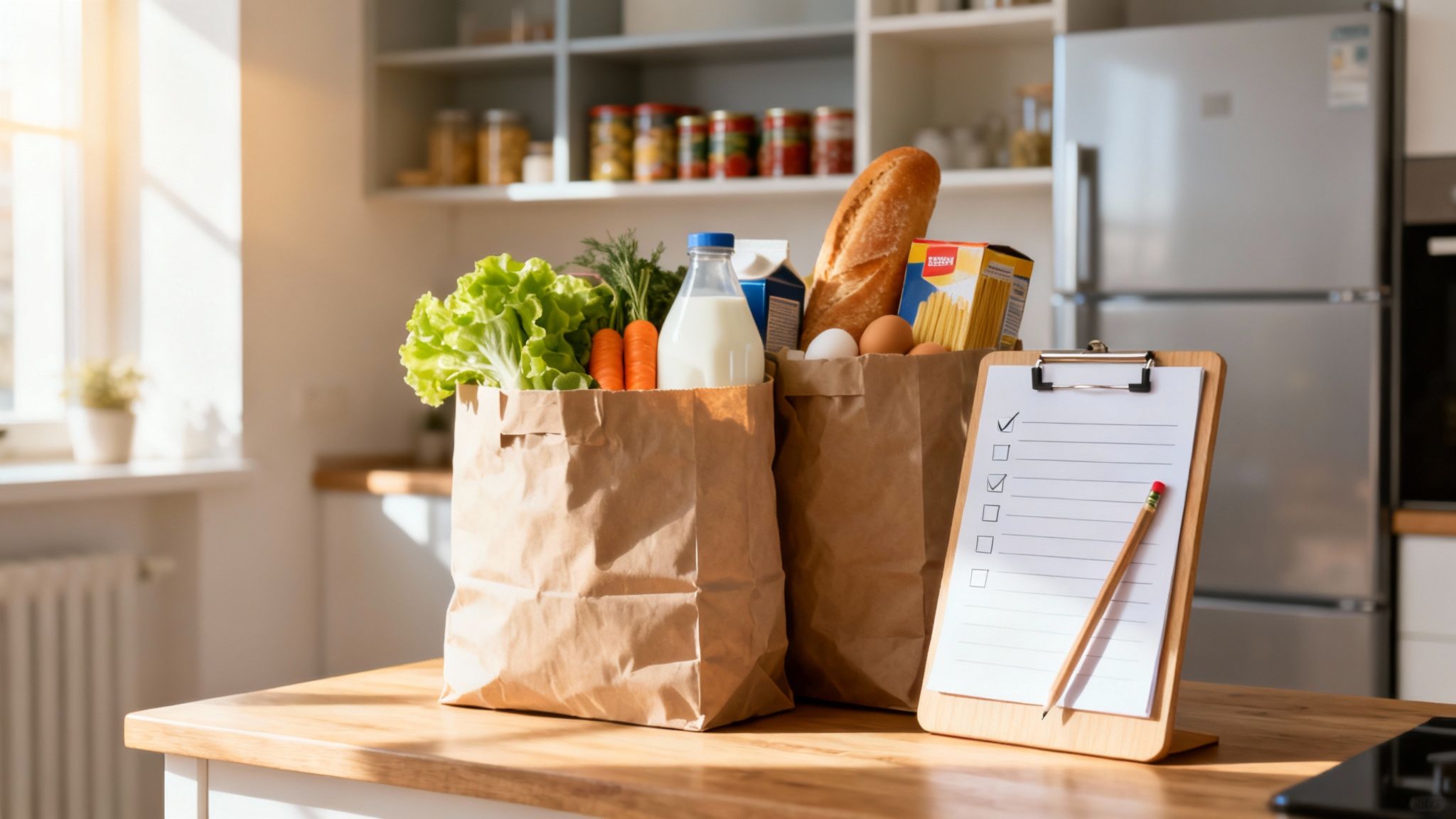
A solid new apartment grocery list is your secret weapon for a move-in that doesn't end in a stress-induced pizza order. The idea is to build a functional kitchen from scratch, focusing on pantry workhorses like oil and spices, versatile fridge staples like eggs and milk, and some key freezer items you'll be glad to have.
Conquering Your First Grocery Run for a New Apartment
Moving into your first apartment is a huge deal! But that buzz can fade fast when you open your kitchen cupboards to find… absolutely nothing. Don't just wander the grocery aisles hoping for the best; you need a game plan.
This first massive shop isn't about buying ingredients for specific meals for the week. It's about building a foundation. Think of it like investing in your kitchen's infrastructure—these are the core components that will become the backbone of pretty much everything you cook.
Prioritize Foundational Items
Your first list should be all about items with a long shelf life and a ton of different uses. These are the ingredients that turn a few fresh items into an actual, satisfying meal. Make sure your budget is focused on these must-haves:
- Cooking Oils and Vinegars: You can’t really cook without them. At a minimum, grab some olive oil, vegetable oil, and a basic vinegar for simple salad dressings.
- Essential Spices: Don't go crazy here. Just start with the basics: salt, black pepper, garlic powder, and onion powder. This fantastic four will season almost anything you can think of.
- Versatile Pantry Staples: Things like rice, pasta, canned tomatoes, and beans are cheap, last forever, and are the perfect base for quick, easy dinners when you're tired and hungry.
Be prepared: this first stock-up is always the most expensive one. It’s no surprise that 78% of people feel overwhelmed during their first grocery trip in a new place, often spending 2-3 hours wandering the store. A good plan is the best way to fight that stress and stick to your budget.
Your first grocery list isn't just about food; it's about setting up a functional space. When you focus on multi-purpose essentials, you're giving yourself the power to cook real meals from day one. That means saving money and avoiding the trap of expensive takeout.
To make things even easier, you might want to try using the best grocery list app to keep everything organised on your phone.
And hey, don't forget to look for ways to save a few bucks. Taking advantage of student deals on groceries from places like https://studentwowdeals.com/discounts/woolworths/ can really help cut down the cost of this crucial first shop.
Building Your Pantry the Smart Way
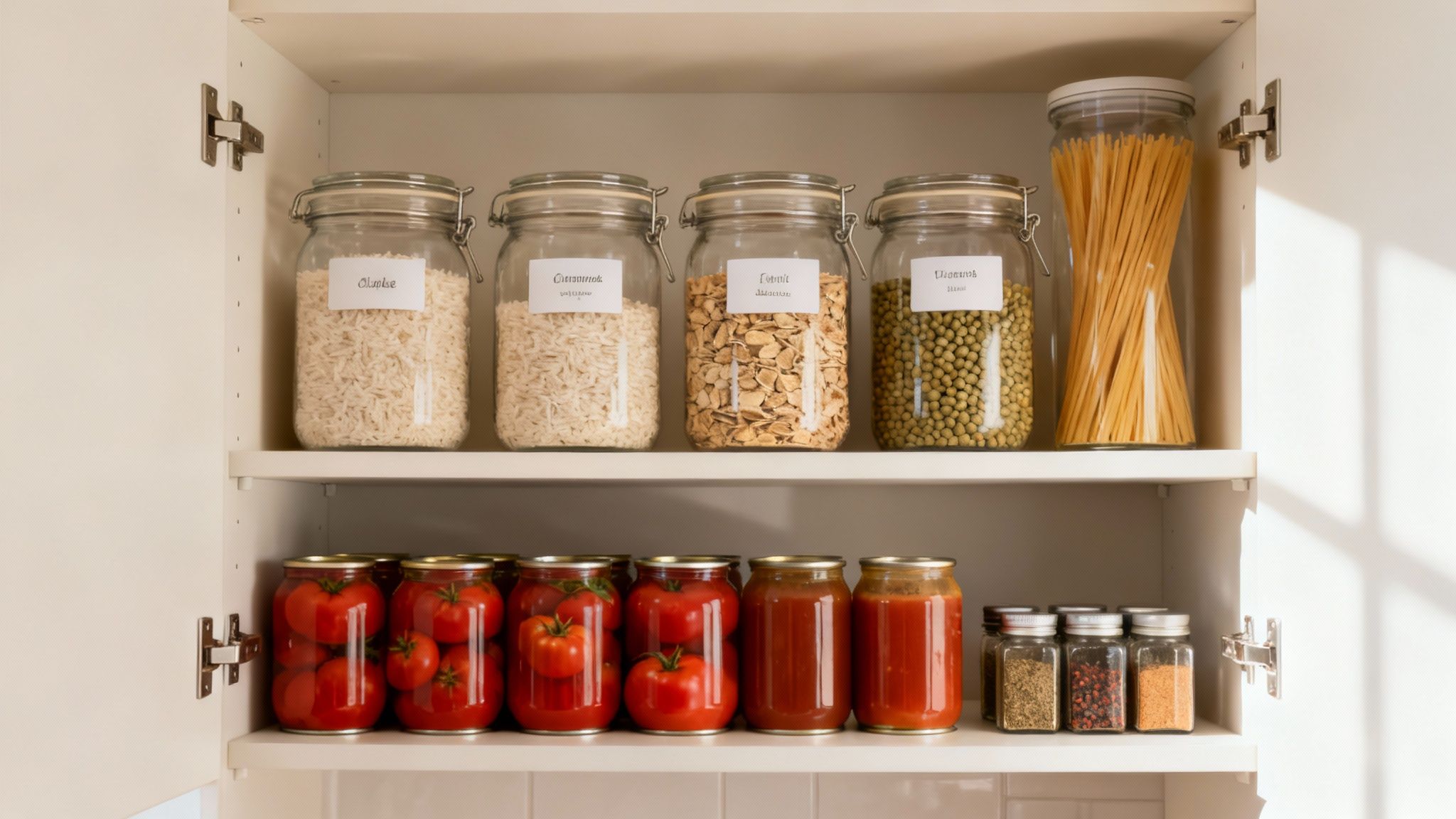
Let's be real: a well-stocked pantry is your secret weapon against last-minute takeout orders that drain your bank account. This isn't just about cramming cans onto a shelf. It's about building a smart foundation of multi-purpose ingredients that can turn into dozens of easy meals.
That first big grocery trip is going to feel expensive, and that’s mostly because of these foundational items. According to the U.S. Department of Agriculture, things like oils, spices, and baking supplies can gobble up 35-45% of your initial grocery budget, even though they don’t weigh much in your cart.
Focus on Versatile Grains and Legumes
Grains and legumes are the undisputed champions of student cooking. They're dirt cheap, last forever, and can be thrown into pretty much anything, from a hearty dinner to a quick lunch. You don't need a massive collection to get started.
Just grab a few essentials:
- Long-grain white rice: The ultimate base for stir-fries, curries, or just a simple side.
- Pasta: Get one long shape (like spaghetti) and one short one (like penne). You'll be ready for any sauce that comes your way.
- Oats: Not just for a quick breakfast. You can blend them into flour for baking if you're feeling adventurous.
- Canned beans: Black beans, chickpeas, and kidney beans are your protein-packed best friends. Toss them in salads, tacos, or chili.
With these on hand, you’ll always have the makings of a solid meal, even when your fridge is looking a bit tragic.
Pro Tip: Don't get sucked in by the fancy name brands for these basics. Store-brand rice, pasta, and canned goods are almost always just as good but way cheaper. Save that cash for something more exciting.
Master the Flavor Fundamentals
Bland food is boring food. The good news is you only need a few key liquids and spices to turn simple ingredients into something you actually want to eat. This is where a small investment pays off big time, meal after meal.
When it comes to cooking oils and vinegars, keep it simple. Start with a neutral oil like canola or vegetable for high-heat cooking and a bottle of extra-virgin olive oil for salad dressings. A single bottle of apple cider or red wine vinegar is all you need for making killer vinaigrettes from scratch.
For your spice rack, you can cover a huge range of recipes with just these six:
- Salt
- Black pepper
- Garlic powder
- Onion powder
- Paprika
- Dried oregano or an Italian seasoning blend
To really level up and keep fresh flavors on hand, you could even learn how to create an herb garden for apartment living. It's a fun, cheap way to add fresh basil, mint, or rosemary to your dishes and feel like a real chef.
Stocking Your Fridge and Freezer for Success
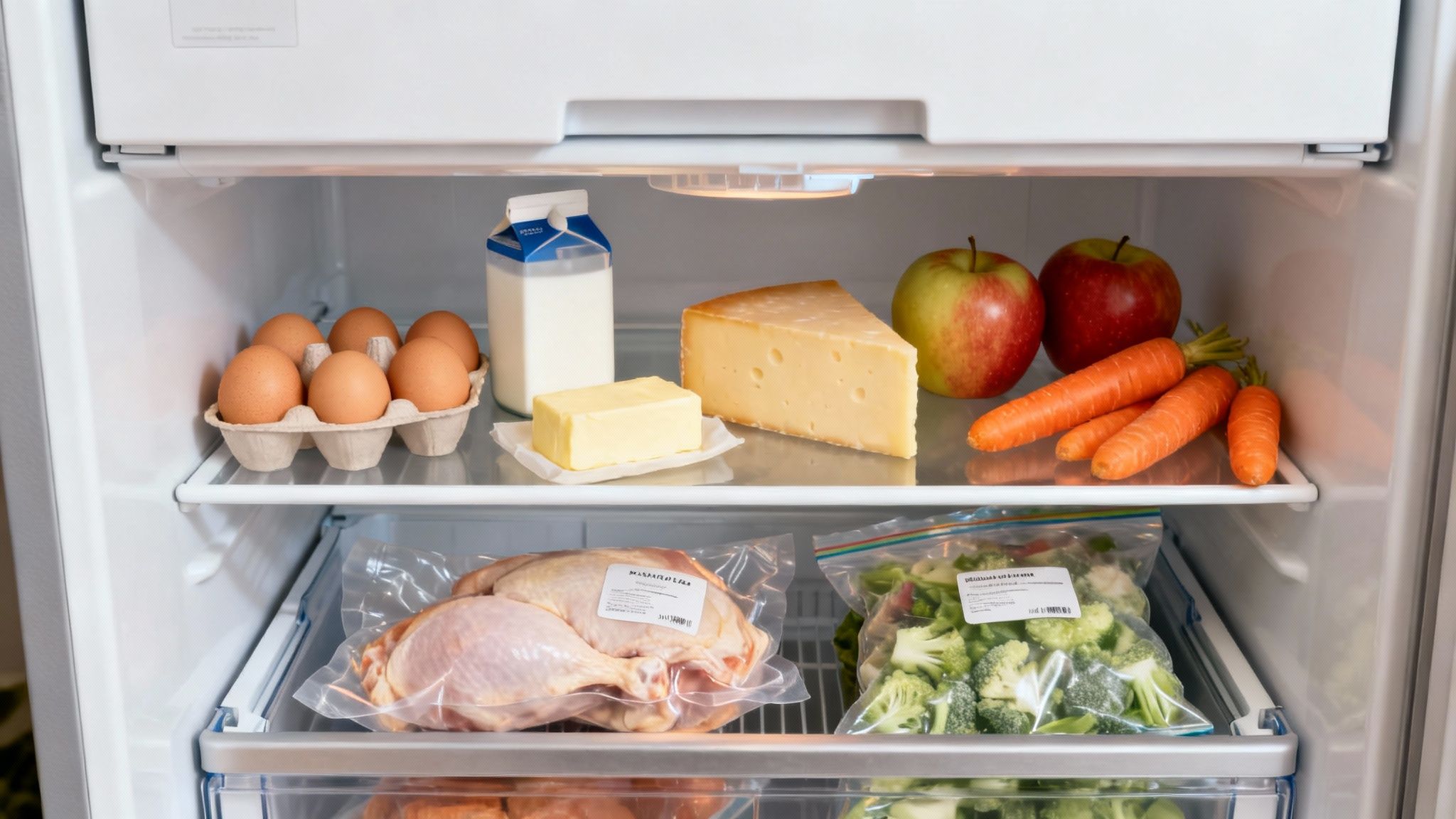
While the pantry is your long-game, your fridge and freezer are where the daily action happens. This is your command center for grabbing a quick breakfast, throwing together lunch, or getting dinner started. The whole point is to fill them with versatile stuff that actually fits your meal plan without just… going bad.
Seriously, don’t make the classic mistake of going wild in the produce aisle on your first big shop. It’s way better to start with a solid base of essentials that last a while and build from there. Your initial new apartment grocery list should be all about flexibility.
Fridge Must Haves for Week One
Your fridge doesn't need to be bursting at the seams to be useful. In fact, a few key players will get you through that chaotic first week (and beyond), forming the foundation for a ton of easy meals.
Get started with these core items:
- Dairy and Eggs: A carton of eggs is non-negotiable. They're the ultimate quick protein fix. Also grab milk (or your favorite plant-based alternative), some butter, and a block of versatile cheese like cheddar or mozzarella.
- Durable Produce: You need some fresh stuff, but you have to choose wisely. Think apples, oranges, carrots, and onions. These guys will hang around a lot longer than delicate berries or that bag of spinach you had good intentions for.
- Condiments: Just grab the basics you know you'll use constantly. We're talking ketchup, mustard, mayo, and maybe a bottle of your go-to hot sauce.
This simple approach keeps you from throwing away sad, spoiled food while you're still surrounded by unpacking boxes and just trying to figure out your new daily rhythm.
A classic rookie mistake for first-time apartment dwellers is buying way too many perishable items at once. Focus on long-lasting produce like root vegetables and sturdy fruits for your initial stock-up. You can always grab delicate things like lettuce and berries on smaller, more frequent trips.
Make Your Freezer a Meal Prep Powerhouse
Your freezer is your secret weapon. For real. It’s how you save time, slash your food budget, and always have a backup plan for those nights when you’re just too wiped to cook from scratch.
When you stock it smartly, you’re basically doing a huge favor for your future self.
Fill it with these freezer champions:
- Proteins: Buying chicken breasts, ground meat, or fish in those big family packs is always cheaper. The trick is to portion everything into smaller freezer bags before you freeze it. Instant single meals.
- Frozen Fruits & Veggies: Newsflash: they're just as nutritious as fresh and last for months. A bag of frozen broccoli, peas, corn, or mixed berries is your best friend for stir-fries, easy side dishes, and morning smoothies.
- Bread & Leftovers: Yep, bread freezes beautifully! You can also freeze leftover chili, soup, or pasta sauce in single-serving containers. This one simple habit will drastically cut down on how much food you waste.
Your First Week New Apartment Grocery List
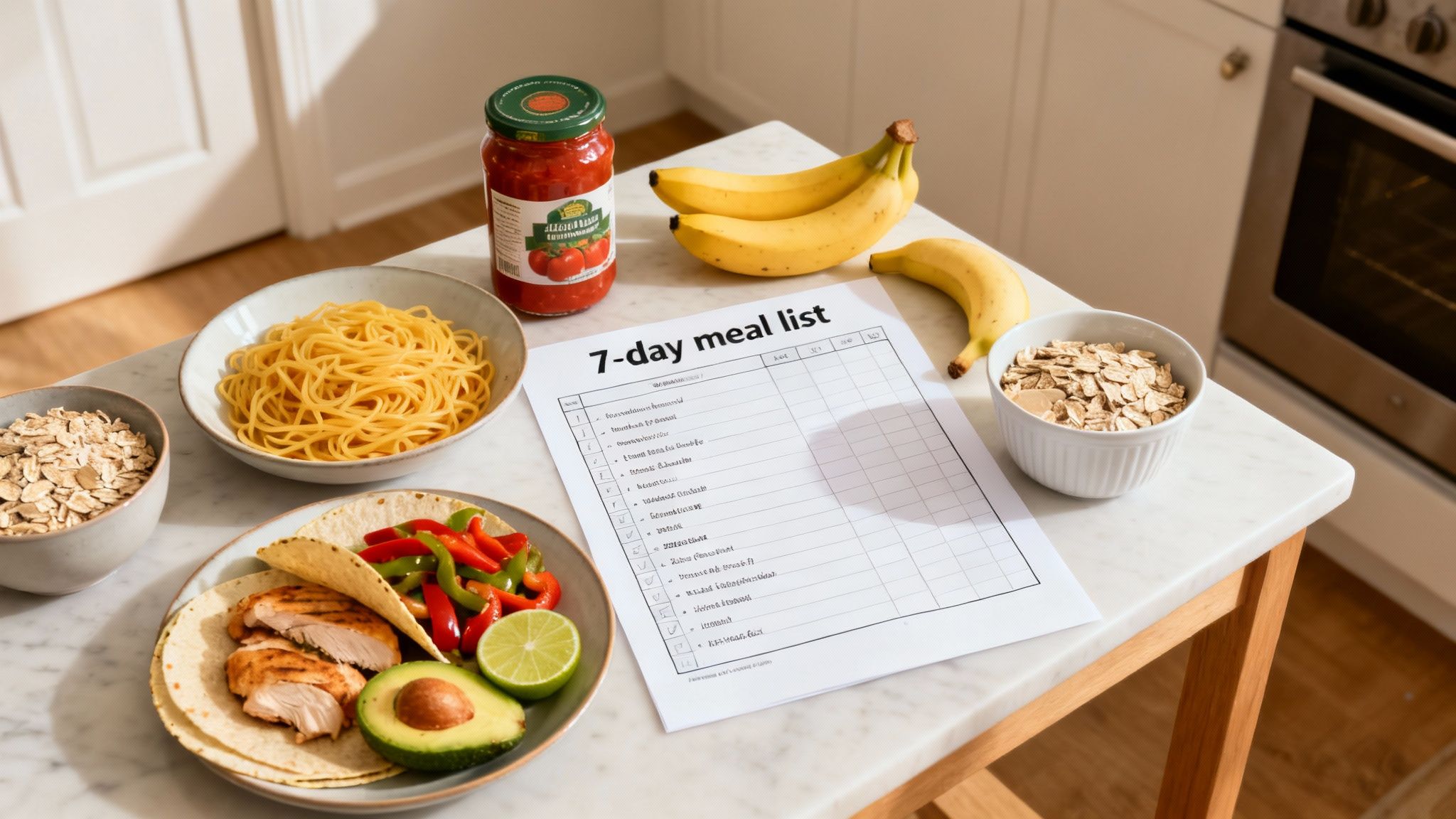
Okay, you've survived the massive initial stock-up. Now for the real challenge: what do you actually eat this week? Let’s be real, with boxes everywhere and exhaustion hitting hard, your goal is simple, satisfying meals that don't require a dozen new ingredients.
This is where a super-targeted weekly list comes in. Forget trying to plan seven unique, complex dinners. Instead, focus your new apartment grocery list on a few core meals and versatile ingredients you can mix and match. It’s the best way to avoid buying a bunch of fresh produce that might go bad before you even find your can opener.
Believe it or not, market research shows the average new renter buys 40-60 different food items on their first big trip, and up to 20% of it spoils before it’s ever used. A smart weekly plan is your best defence against becoming another statistic.
A Sample Plan for Three Easy Dinners
To get you started, let's build a shopping list around three classic, low-effort meals. The secret here is that they use overlapping ingredients, which is the key to saving money and cutting down on waste.
- Meal 1: Spaghetti and Marinara: A comforting classic you can’t mess up. You’ll just need pasta and a jar of your favourite sauce, which should already be in your pantry from that initial stock-up.
- Meal 2: Chicken and Veggie Stir-fry: This one is incredibly fast and a great way to use up whatever veggies you have on hand. Just serve it over the rice you already bought.
- Meal 3: Easy Tacos: Who doesn't love tacos? It's a fun, customizable meal that requires minimal actual cooking. Perfect for a chaotic move-in week.
Your first week isn't about becoming a gourmet chef; it's about survival. Choose meals that are forgiving, quick to assemble, and require minimal cleanup. A solid plan now sets a great foundation for future meal-prepping habits.
Your Targeted Weekly Shopping List
To help you out, I’ve put together a practical shopping list based on a simple 7-day meal plan. This will guide your first weekly grocery run and help you avoid overspending.
Sample 7-Day Meal Plan & Shopping List
| Meal Type | Meal Idea | Shopping List Items |
|---|---|---|
| Breakfast | Cereal or Toast | From pantry stock-up |
| Lunch | Sandwiches or Leftovers | Deli Meat, Sliced Cheese, Bread |
| Dinner 1 & 2 | Spaghetti & Marinara | From pantry stock-up |
| Dinner 3 & 4 | Chicken & Veggie Stir-fry | Chicken Breast, Bell Pepper, Onion, Broccoli |
| Dinner 5 & 6 | Easy Tacos | Ground Beef, Lettuce, Tomato, Avocado, Shredded Cheese, Sour Cream, Tortillas, Taco Seasoning, Salsa |
| Dinner 7 | Leftovers / "Clean out the fridge" night | Use up any remaining ingredients! |
This list is intentionally short because it relies on the pantry and freezer staples you’ve already purchased (like rice, pasta, sauce, and cooking oil). It ensures you eat well without overspending or overwhelming your new, still-being-organized kitchen.
For students looking to simplify that first week even further, meal kit services can be a lifesaver. Check out these student discounts on Dinnerly for affordable meal options delivered right to your door.
Mastering the Grocery Store on a Student Budget
Alright, so you’ve got your list. That's half the battle, but turning that list into serious savings at the checkout? That's where the real skill comes in. It all starts before you even think about grabbing a shopping cart.
Your new best friend is meal planning. I know, I know, it sounds like a chore, but just deciding what you’ll eat for a few dinners each week is a game-changer. It stops you from wandering the aisles and grabbing random, expensive stuff you don't need. This one habit keeps your shopping list tight and your spending on a leash.
Unlocking Deals and Discounts
Before heading out the door, take ten minutes to scan the weekly flyers for your local grocery stores. You can usually find them online or in the store's app. Seriously, this is your treasure map to the best deals. Planning your meals around what’s on sale—like chicken thighs or whatever veggies are in season—is one of the smartest money moves you can make.
Most stores also have digital coupons you can "clip" right in their app. Combine these with their loyalty programs. They're almost always free to join and get you special member pricing. It might feel like small savings here and there, but trust me, it adds up big time over a semester.
Here's a pro tip rookies always miss: ignore the sticker price and look at the unit price. The biggest box of cereal isn't automatically the best deal. Always compare the price per ounce or per item to see which size actually gives you the most bang for your buck.
And don't forget to play the student card! A lot of stores know students are on a tight budget and offer special perks. Never be shy about asking at the customer service desk if they have a student discount day. For instance, some chains offer specific savings, so it's always worth checking if there's an Aldi student discount in your area.
Smart Shopping Techniques In the Aisles
Once you're actually in the store, your strategy needs to shift to making smart choices on the fly. Nailing the difference between what to buy in bulk versus what to buy fresh is a skill that will save you a ton of cash (and prevent a science experiment from growing in your fridge).
Here’s a quick rundown:
- Buy in Bulk: Stick to non-perishable stuff you burn through constantly. Think rice, pasta, toilet paper, and canned goods. Just do a quick check to make sure you actually have room to store it all before you commit.
- Buy Fresh Weekly: Things that go bad quickly, like leafy greens, berries, and most dairy, should be bought in smaller amounts more often. This will drastically cut down on food waste and save you from literally throwing money in the trash.
Also, pay attention to how the store is laid out. Grocers are sneaky and put the most expensive, tempting items right at eye level. Take a second to look at the top and bottom shelves. That’s where you’ll often find the better deals and store-brand items that are just as good (sometimes better!) than the name brands. This simple habit can trim your final bill without you even noticing a difference in quality.
Got Questions About That First Grocery Trip? We’ve Got Answers.
Moving into your first apartment is a huge deal. It’s exciting! But then you open the kitchen cupboards, see nothing but empty space, and the questions start rolling in. That feeling of being a little overwhelmed is totally normal—most people have the same worries. Let's tackle some of the most common questions that pop up when you're staring down the barrel of your first big grocery shop.
How Much Should I Budget for My Very First Grocery Trip?
This is the big one, and I'll be straight with you: your first trip will always be the most expensive. No way around it.
A good starting budget for this initial stock-up is anywhere from $150 to $250. I know, that number might make your eyes water a bit. The reason it’s so high is that you're buying all the foundational items at once—the stuff you won't need to buy again for months. Think cooking oil, flour, a full set of spices, and all the condiments. These are the building blocks of your kitchen.
After this first haul, your weekly grocery bills will drop significantly. You’ll likely settle into a much more manageable $50 to $100 a week, depending on your eating habits.
What Are Some Common Items People Forget to Buy?
It happens to everyone. You get so focused on the food—the pasta, the chicken, the snacks—that you completely forget about the things that make a kitchen actually work. The items people most often overlook aren't exciting, but man, you'll miss them when they're not there.
Here are a few of the top offenders I’ve seen people forget:
- Cooking oil: You really can't cook much without it!
- Salt and pepper: The absolute basics are so easy to miss.
- A can opener: You’ll only realize you forgot this when you're staring at a can of beans with no way in. Trust me, it's a humbling experience.
- Dish soap and sponges: Because cleaning up is just part of the deal.
- Trash bags: This one becomes painfully obvious very, very quickly.
- Food storage: Aluminum foil, plastic wrap, or a few reusable containers for leftovers are lifesavers.
Here's a little trick: Mentally walk through making a super simple meal, like spaghetti. You'll quickly realize you need oil for the pan, salt for the water, and something to store the leftovers in. It’s a great way to jog your memory.
How Do I Create a Grocery List with Roommates?
Ah, the roommate grocery dance. Living with other people is all about communication, especially when it comes to shared cash for things like groceries. Before anyone even thinks about heading to the store, have a quick chat.
First up, figure out what's communal and what's personal.
- Communal Items: These are the things everyone uses. Think cooking oil, salt, pepper, dish soap, and paper towels.
- Personal Items: This covers individual snacks, drinks, any specific dietary foods, and the ingredients for your own meals.
For all the communal stuff, create a shared fund where everyone chips in a few bucks each month. Another easy way is to simply rotate who buys these items. Use a shared digital list on an app like Google Keep so anyone can add something when it's running low. This little bit of planning prevents arguments, stops you from ending up with five bottles of ketchup, and makes sure everyone pulls their weight.
Should I Buy in Bulk for My First Apartment?
Buying in bulk can be an amazing money-saver… but it can also be a total trap. You have to be strategic about it, especially when you’re working with a tiny apartment kitchen where storage space is pure gold.
It's a smart move to buy non-perishable staples in bulk—things you know you'll use constantly. We're talking toilet paper, rice, pasta, and canned goods. Go for it.
But hold back on buying perishable items or specialty foods in massive quantities. Before you grab that giant, tempting bag of lentils, be honest with yourself: will you really eat all of it before it goes bad? Your limited cabinet space will thank you for being realistic.
Ready to make student life more affordable? Student Wow Deals offers exclusive access to 500+ discounts from top brands, helping you save on everything from groceries to tech. Find out more at https://studentwowdeals.com.