



Saving money as a student isn’t some big, scary mystery. It’s really just about making small, smart changes that stack up over time.
Honestly, it boils down to four key moves: figuring out a simple budget that actually works, cutting your daily costs without killing your social life, using your student status to get every possible discount, and finding clever ways to bring in a bit more cash. Get these down, and you’ll build a financial cushion that lets you enjoy uni, not just scrape by.
Your Financial Playbook for Thriving at Uni
Welcome to the no-nonsense guide to handling your money while you study. Let’s get one thing straight right away: being a student doesn’t have to mean being broke. It’s a total myth. With a bit of a framework and some good habits, you can get on top of your finances and set yourself up for the future, starting now.
This isn’t about being a total cheapskate or saying no to everything fun. It’s about being intentional with your spending. Think of it as creating your own personal financial playbook—one that’s flexible, effective, and built for your real life.
The Core Principles of Smart Student Saving
Getting good with money at uni really just comes down to a few basic ideas. Once you get these, making better financial decisions becomes second nature, and saving cash turns from a chore into a reflex.
These are the pillars to build on:
- Mindful Spending: First up, you need to know where your money is actually going. This isn’t about feeling guilty; it’s just about awareness.
- Strategic Cost-Cutting: Look for easy wins. This means finding places to cut back that don’t cramp your style, like swapping that daily café coffee for a good brew you make at home.
- Maximizing Your Student Status: Your student ID is basically a superpower. It unlocks a whole world of savings that regular folks can’t get.
- Income Generation: Saving is key, but earning a little extra on the side gives you breathing room and helps you hit your money goals way faster.
The real goal here is to create habits that stick, not a rigid plan that makes you miserable. It’s the small, consistent actions that build up to serious savings over the semester, helping you dodge debt and cut down on money stress.
Why This Matters Now More Than Ever
Nailing these skills while you’re studying is the ultimate prep for long-term financial success. You’ll learn how to handle bills, plan for big purchases, and deal with unexpected costs without freaking out. This is especially vital if you’re thinking about studying abroad and need to map out all your potential expenses. If that’s on your radar, don’t miss any critical details; check out this essential student abroad health insurance guide.
This is where tools like Student Wow Deals become absolute game-changers, hooking you up with deals on everything from food delivery to that new laptop you need. When you combine a solid budget with a powerful discount-finder, you’ve got a two-pronged attack that makes saving both effortless and seriously effective.
Build a Student Budget That Actually Works
Forget those complicated, rigid spreadsheets you’ll abandon after a week. The real secret to budgeting as a student is all about flexibility, not restriction. A budget that actually works is just a simple plan for your money that reflects your real life—from late-night study snacks to weekend plans with your mates.
The goal isn’t to track every single penny you spend. It’s about getting a clear picture of your finances so you can make smarter choices and avoid that gut-wrenching feeling when you check your bank balance.
This is more important now than ever. University costs are climbing, with some reports showing that families are spending 9% more on college than in previous years. Learning to manage your money isn’t just a useful skill; it’s a necessity for survival.
The 50/30/20 Rule: A Student’s Best Friend
A fantastic starting point for any student budget is the 50/30/20 rule. It’s a super straightforward way to divvy up your money after tax.
- 50% for Needs: This chunk is for your absolute essentials. We’re talking rent, bills, groceries, transport to class, and vital course materials. These are the non-negotiables you have to cover each month.
- 30% for Wants: This is for your lifestyle and social life. It covers things like Netflix, eating out, concert tickets, new clothes, or hobbies. Basically, all the fun stuff that makes uni life memorable.
- 20% for Savings & Debt: This final slice is for your future self. Use it to build an emergency fund for unexpected costs (like a broken laptop), pay down any debts faster, or save for a big goal like a spring break trip.
Keep in mind, this is a guideline, not a strict law. If your rent eats up more than 50% of your income—which is pretty common for students—you’ll just need to tweak the other categories. The key is making it work for your situation.
Track Your Income and Spending
Before you can split up your money, you need a clear idea of what’s coming in and where it’s all going.
First, list all your income sources. This could be a mix of your part-time job, student loan payments, help from family, or cash from a side hustle. Add it all up to get your total monthly income.
Next, track your spending for a couple of weeks. You can use a simple notes app, a budgeting app, or just a small notebook. The idea is to spot your spending patterns. You might be shocked at how much those daily coffees or impulse buys are actually costing you.
This infographic breaks down the core strategies for getting your student savings on track.
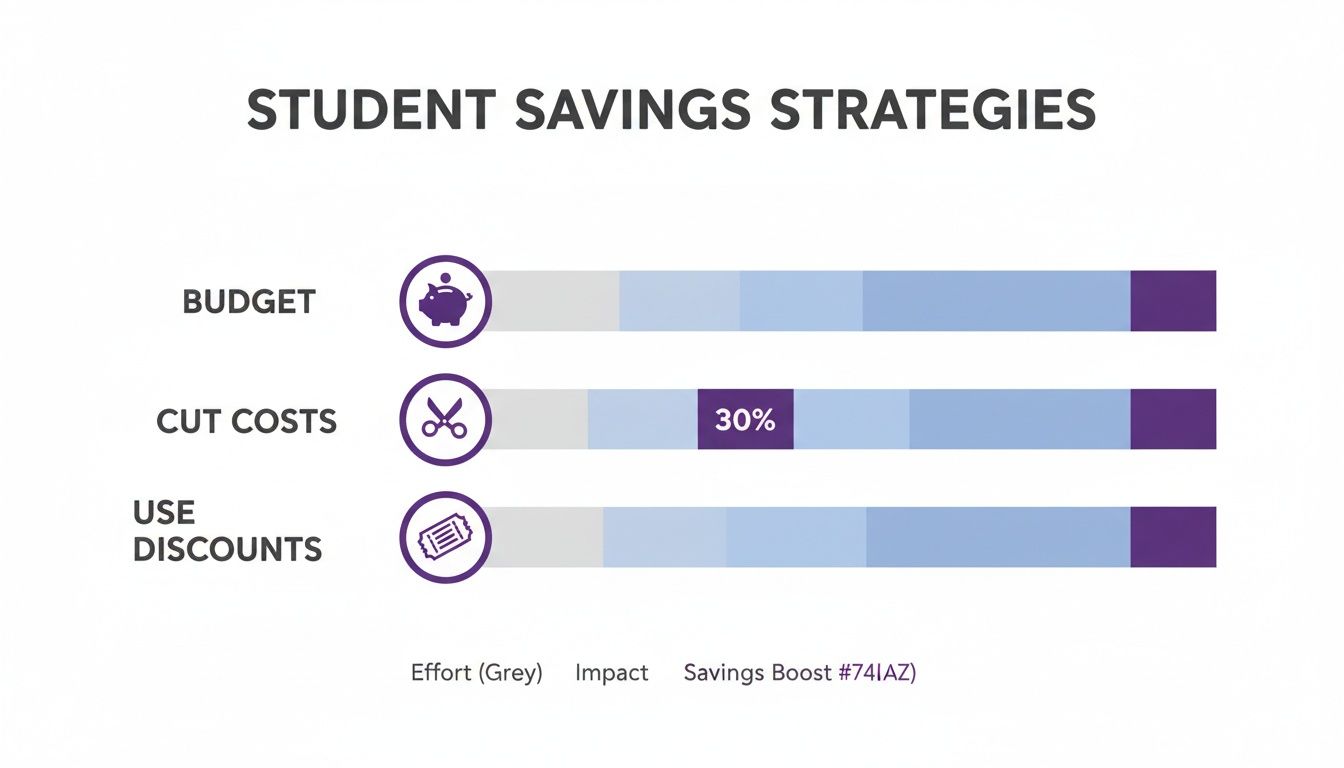
As you can see, when you combine a solid budget with smart cost-cutting and hunting for discounts, you create a seriously powerful financial strategy.
Make Your Budget Work for You
Once you’ve got your numbers, it’s time to build your budget. The 50/30/20 rule is a great guide for setting spending targets for your needs, wants, and savings. If you notice your spending in one area is way off, look for small places to make adjustments.
For example, if your “wants” are consistently creeping over that 30% mark, maybe you could cancel a subscription you barely use or plan more low-cost social activities like a park hang-out instead of a pricey night out.
Here’s a quick look at how a typical student budget might break down using this rule, based on a monthly income of £1,140.
The 50/30/20 Student Budget Breakdown
| Category | Percentage | Monthly Amount | Example Expenses |
|---|---|---|---|
| Needs | 50% | £570 | Rent, groceries, utilities, phone bill, transport pass, essential textbooks |
| Wants | 30% | £342 | Takeaways, Netflix/Spotify, pub nights, clothes, hobbies, coffee |
| Savings & Debt | 20% | £228 | Emergency fund, saving for a holiday, paying off a credit card, investments |
This table just gives you a framework. Your own budget will look different, and that’s totally fine! The goal is to create a plan you can actually stick to.
You can also boost your savings by cutting down on essentials. Finding better deals on things like textbooks is a classic money-saver. For more tips on that, check out our guide on how to save on college textbooks. The whole point is to make conscious choices that line up with your financial goals.
Alright, you’ve got your budget sorted. Now for the fun part: actually slashing your spending and watching those savings grow. This is where you can make a huge difference to your bank balance, and it often just comes down to tweaking a few small habits.
We’re hitting the big three student expenses head-on: food, housing, and transport.
Don’t worry, this isn’t about living on instant noodles in the dark. It’s about being smarter with your cash so you have more of it for the things you really want to do.
Conquer Your Grocery Bill
Food is one of the easiest places to overspend without even realising it. A few takeaways here, a daily coffee there… it all adds up, and fast. The secret weapon here is simple: planning.
Meal prepping will absolutely change the game for you. Seriously. Spend a couple of hours on a Sunday afternoon cooking up a few big batches for the week. Think about things you can use in a couple of different ways—a big pot of bolognese sauce can go on pasta one night and then become the base for a chilli con carne with rice a day or two later.
Get into this habit and you’ll sidestep those expensive on-campus lunches and kill the temptation to order Uber Eats after a marathon study session.
A study I read a while back confirmed what I always suspected: people who meal prep not only spend way less on food, but they also tend to have healthier diets. It’s a win-win for your wallet and your wellbeing.
Buying in bulk is another pro move, but only for the right things. Focus on the non-perishable stuff you get through regularly:
- Dried goods: Pasta, rice, oats, lentils—all of these are way cheaper when you buy the bigger bags.
- Spices and seasonings: That tiny jar of paprika is a rip-off. A bigger container costs a little more upfront but will last you months.
- Frozen produce: Frozen fruit and veg are just as nutritious as fresh, last for ages, and mean you’re not throwing out sad, wilted spinach at the end of the week.
And please, never go to the supermarket without a list. Supermarkets are literally designed to make you buy stuff you don’t need. A list is your shield against impulse buys. While you’re at it, check out the incredible student food and drink deals available—they can cut the cost of both your weekly shop and the odd treat.
Make Your Housing More Affordable
Rent is almost certainly your biggest monthly bill, so any savings here are a massive win. If you’re still looking for a place, always prioritise affordability. A slightly longer commute might seem like a drag, but it could save you hundreds of dollars every single month.
Once you’re in, it’s all about the utility bills. These can creep up on you, but you have more control than you might think. Little things really do add up:
- Unplug your gadgets: Anything on standby is still sipping power. Chargers, game consoles, your TV… unplug them when you’re not using them. This alone can trim your electricity bill by up to 10%.
- Get friendly with the thermostat: Just turning the heating down by one degree can make a noticeable dent in your bill. Throw on a jumper before you crank up the heat.
- Talk to your housemates: Get on the same page about things like heating and lights. When everyone’s committed to saving energy, it keeps bills low and avoids arguments.
Get Smart About Transportation
Getting from A to B doesn’t have to cost a fortune. Before you automatically tap your card or call an Uber, think about the alternatives. For most students, public transport is the way to go.
Check out what student travel cards or bus passes are on offer. The upfront cost might feel steep, but if you’re commuting to uni every day, it’s almost always cheaper than paying per trip.
And don’t forget these other options:
| Transport Method | Cost Factor | Benefits |
|---|---|---|
| Cycling | Low | Free after the initial purchase, brilliant exercise, eco-friendly. |
| Walking | Free | Perfect for short trips, great for your mental and physical health. |
| Carpooling | Medium | Split the cost of fuel and parking with mates for bigger journeys. |
Honestly, owning a car as a student is a massive financial black hole. When you factor in insurance, petrol, maintenance, and parking, the costs are insane. Unless you absolutely need one, ditching the car is one of the single biggest money-saving moves you can make.
Hack Your Textbook and Course Material Costs
Textbooks can be a nasty financial surprise at the start of every semester. My golden rule: never, ever buy a brand-new textbook from the campus bookshop until you’ve checked out every other option.
Your first stop should always be the university library. They’ll have copies of required reading, often including digital versions you can access from your laptop. Get in early though, because they’re always in high demand.
Next, hunt for second-hand copies online. Check student Facebook groups or online marketplaces where students from the year above are desperate to offload their old books for a fraction of the price. Renting textbooks is another brilliant, cost-effective strategy.
If you really want to kickstart your savings and see where your money is actually going, try taking on a no spending challenge for a week or even a month. It’s a fantastic way to reset your habits and find easy wins across all these categories. Making these smart swaps on your everyday essentials will quickly turn saving money from a chore into a simple reflex.
Unlock The Power Of Student Discounts
That student ID in your wallet? It’s probably the most powerful money-saving tool you own right now. Seriously. It’s not just for getting into the library; it’s a golden ticket to savings on pretty much everything. The first step to saving a ton of cash is getting into the habit of asking one simple question before you pay for anything: “Do you guys do a student discount?”
A lot of students feel a bit shy about asking, but trust me, businesses expect it. That one little question can easily knock 10-15% off meals, clothes, tech, and even your phone bill. Make it a reflex, and you’ll cut your spending without changing your lifestyle at all.

Go Beyond The Obvious Deals
Sure, the big clothing stores and cinemas splash their student deals everywhere, but tons of smaller, local businesses have them too. Think about that coffee shop you love near campus, the independent bookshop, or even the local mechanic. They don’t always advertise these perks, so it literally pays to ask.
Platforms like Student Wow Deals have been a game-changer. Launched back in 2014 in Queensland, Australia, they’ve helped over 400,000 students save cash with 500+ offers from giants like Uber Eats, McDonald’s, Canva, and ASUS. When you consider that families in the U.S. are dropping an average of $30,837 a year for college, every single dollar you can save makes a difference.
Let Deal-Finding Platforms Do The Hard Work
Trying to remember which place offers what discount is a massive headache. This is where dedicated student discount platforms come in. Instead of bouncing between dozens of websites, these services pull all the best offers together in one spot.
Student Wow Deals makes it ridiculously simple. They curate deals from major brands, so you can easily find savings on your next Uber Eats order or a new laptop. One of the best features is the local deals finder—it uses your location to show you nearby savings on restaurants and entertainment. By exploring the full range of available student discounts, you can find some absolute gems right in your own neighbourhood.
The real pro move is to make checking these platforms a reflex before you buy anything. Eyeing a new pair of headphones? Check the tech section first. Planning dinner out? See what local spots have a deal on.
This tiny change to your shopping routine guarantees you never miss a chance to save.
Master The Art Of Discount Stacking
Alright, if you want to take your savings to the next level, you need to think like a pro deal-hunter. This means “stacking” multiple offers to crush the original price. It takes a little planning, but the payoff is huge.
Here’s how you can get started:
- Time Your Purchases: Wait for big sales events like Black Friday or end-of-season clearances. Your student discount can often be applied right on top of the sale price.
- Sign Up for Newsletters: So many brands will give you a 10-20% discount just for signing up for their emails. You can often stack this one-time code with your regular student discount.
- Use Loyalty Programs: Join the free rewards programs for brands you shop with all the time. You’ll earn points or cashback on your already-discounted purchases, creating another layer of savings.
Imagine finding a pair of trainers already on sale for 30% off. You could then apply your 15% student discount and a 10% newsletter sign-up code. Just like that, you’ve slashed the original price by more than half. This is how you go from being a regular spender to a savvy saver who never pays full price.
Boost Your Income with Student-Friendly Side Hustles
Saving money is a huge piece of the puzzle, but what if you could just add more money to your pot in the first place? Earning a little extra cash on the side can make a massive difference. It gives you the breathing room to pay bills, save for something big, or just ease that day-to-day financial pressure.
The key is finding flexible work that fits around your studies, not the other way around. Forget rigid, stressful part-time jobs. We’re talking about student-friendly side hustles you can dial up or down depending on how hectic your uni schedule gets.

Monetize Your Skills and Knowledge
Believe it or not, you already have valuable skills that people are willing to pay for. The trick is just to identify what they are and find your market.
If you’re acing a particular subject, tutoring is a natural fit. You could help younger students in your community or even fellow uni students who are getting tripped up by first-year modules. Online platforms can connect you with clients, but don’t underestimate the power of simply sticking a notice up on campus.
Are you a great writer, a talented artist, or a social media whiz? Freelancing could be your ticket. Websites like Upwork or Fiverr have thousands of listings for small projects, from knocking out blog posts to designing logos. You just pick the jobs that look interesting and do them on your own schedule.
Tap Into the Gig Economy
The gig economy is pretty much built for flexible work, which makes it perfect for students. The barrier to entry is super low, and you can often start earning cash within just a few days.
Here are a few popular options to get you started:
- Delivery Services: Companies are always looking for people to deliver food or packages. All you need is a bike or a car, and you can log on to work whenever you have a free evening or weekend.
- Pet-Sitting or Dog-Walking: If you love animals, this one barely even feels like work. People often need someone to look after their pets while they’re at work or away on holiday.
- Odd Jobs: Certain apps connect you with people in your area who need a hand with small tasks like assembling furniture, doing a bit of gardening, or moving boxes. It’s a solid way to make quick cash.
The real beauty of gig work is the total control you have over your hours. Got a huge exam coming up? Just don’t accept any gigs. Quiet week? You can ramp up your hours and bring in that extra income.
Become a Campus Ambassador
Brands are desperate to connect with the student market, and they’ll actually pay you to be their rep on campus. As a campus brand ambassador, your job is to promote a product or service to your peers.
This could involve anything from:
- Handing out flyers or free samples.
- Running a stall at a freshers’ fair.
- Posting about the brand on your social media.
- Organizing small events or competitions.
It’s a fantastic way to earn money while beefing up your CV with real marketing and communication experience. Some programs, like the one offered by Student Wow Deals, even let you earn rewards by helping them find new discounts and events, making the platform even better for everyone. Balancing this kind of work with your studies is often much easier than a traditional job, as the tasks are usually project-based and can be fit into pockets of free time.
Alright, you’ve made it. You now have the complete playbook for not just surviving, but actually thriving financially while you’re at uni.
This isn’t just a list of random tips; it’s about shifting how you think about money. Learning to save as a student isn’t about being miserable and eating two-minute noodles every night (though we’ve all been there). It’s about building smart, sustainable habits. Honestly, it’s the small, consistent moves you make every day that add up and build real financial muscle over time.
Think of each strategy we’ve talked about as another tool in your kit. Budgeting is your map. Smart spending is your compass for day-to-day costs. And student discounts? That’s the turbo-boost for your savings. When you throw a decent side hustle into the mix, you’ve got a powerful system that puts you firmly in the driver’s seat.
The real goal here isn’t just to scrape by until graduation. It’s to build a rock-solid financial foundation that’ll serve you for the rest of your life. You’ve got the power to shape your own future, and it all starts right now.
Your Simple Action Plan
Feeling fired up? Good. Let’s turn that energy into action. Don’t overwhelm yourself by trying to do everything at once. Just start with these three dead-simple, high-impact steps today:
- Sketch Out a Basic Budget: Seriously, just grab a notebook or a notes app. Jot down what’s coming in and what absolutely has to go out. Just seeing the numbers laid out is a massive first step.
- Get a Deals App on Your Phone: Download an app like Student Wow Deals. Make it a reflex to check for a discount before you tap your card for anything.
- Pick One Side Hustle to Explore: You don’t have to launch a business by tomorrow. Just pick one idea from this guide that sounded interesting and spend 30 minutes looking into it. That’s it.
These small wins create momentum. You are now fully equipped to take charge of your money and build the student life you actually want, without the constant financial stress hanging over your head.
Your Top Money Questions Answered
When you’re trying to get a handle on your finances at uni, a lot of questions pop up. It can feel a bit overwhelming, so let’s tackle some of the most common money worries students have with some quick, no-nonsense answers.
How Much Should a Student Actually Save Each Month?
There’s no magic number here, because it all comes down to your income and what you absolutely have to spend on things like rent. A solid guideline to aim for is the 50/30/20 rule, where you try to stash 20% of whatever money comes in towards savings.
So, if you get £1,000 a month, the goal would be £200. But let’s be real—if your rent eats up most of your loan, that can feel impossible. Don’t sweat it. Just start smaller. Even putting away £20 or £50 consistently builds the habit, and that’s what really counts.
What’s the Best Way to Handle a Sudden, Unexpected Expense?
Life happens. Your laptop decides to die mid-assignment, or you need an emergency trip home. This is precisely what an emergency fund is for. Ideally, you’ll have a separate savings pot with enough cash to cover at least one month of essential bills.
If you don’t have that safety net just yet, here’s the game plan:
- Immediately look at where you can slash your “fun” spending for a bit.
- See if you can pick up a couple of extra shifts at work or find a quick one-off gig.
- Whatever you do, try to avoid high-interest credit cards or payday loans. They should be your absolute last resort.
Are Student Bank Accounts Actually Worth It?
One hundred percent, yes. Banks are always competing to get students to sign up, so they roll out some pretty sweet perks. The main things to look for are accounts with no monthly fees and, the big one, an interest-free overdraft.
An interest-free overdraft is your best friend at uni. It lets you go into the red up to a certain limit without getting stung by interest charges. It can be a total lifesaver when a bill is due a week before your student loan drops.
How Can I Save Money If I’m Too Swamped with Uni for a Job?
If your schedule is just too packed for a regular part-time job, you’ve got to play defence and offence. Your first move is to slash your spending by using student discounts on absolutely everything. Never pay full price if you don’t have to.
Then, look for flexible ways to bring in a bit of extra cash. Think low-commitment side hustles you can squeeze into small pockets of free time. This could be anything from filling out online surveys and doing small freelance gigs on Fiverr, to selling old textbooks or clothes online. Every little bit adds up.
Ready to stop paying full price and start saving on everything from your next meal to new tech? Join the Student Wow Deals community for free and get instant access to hundreds of exclusive discounts. Sign up today and make your student budget go further!