


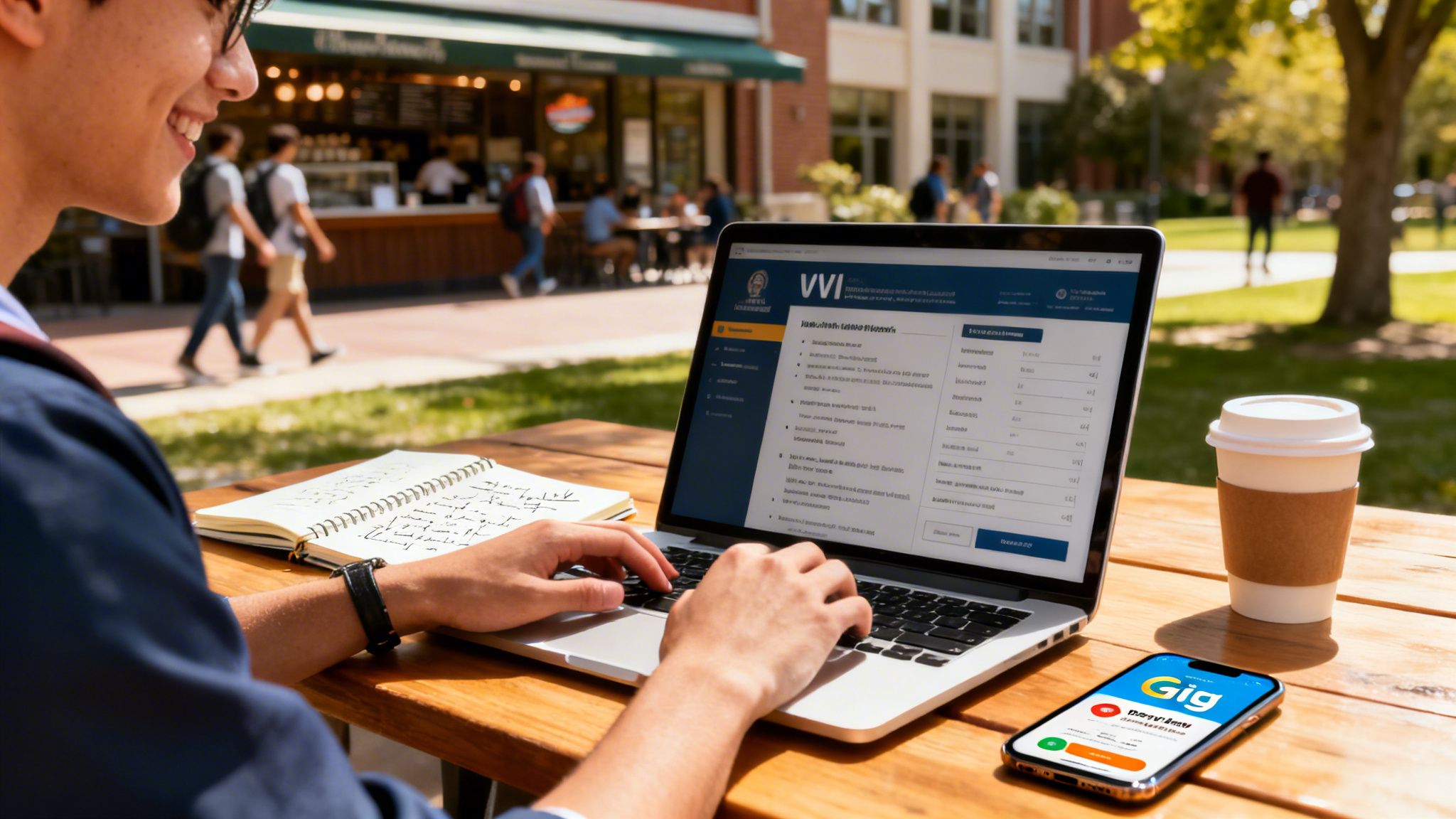
Finding part-time work is a bit like tackling a big university project. You need to get your materials in order, find the right opportunities, and then go after them with a solid plan. It’s less about having a long list of previous jobs and more about showing what you're capable of.
Kickstart Your Student Job Search

Let's be real: juggling lectures, assignments, and a social life is already a handful without worrying about money. A part-time job can be a total game-changer, but the search itself can feel like you’ve taken on another full-time subject.
The good news? Demand for part-time workers is actually really strong. In the U.S., part-time employment hit a high of 29,452 thousand in late 2025 and was still sitting at 28,743 thousand by January 2026. This shows there’s a healthy market for the kind of flexible gigs that fit perfectly around a student's schedule. You can always explore employment trends to see how the numbers stack up.
This guide is here to cut through the usual generic advice. We'll show you how to find a job that actually fits your life, not one that takes it over.
Shifting Your Mindset
Okay, before you even think about opening a job board, the first step is a mental one. You need to stop thinking you have "no experience." As a student, you've got a ton of skills that employers are looking for—they're just packaged a bit differently.
Your experience isn't just about previous job titles; it’s about what you can do. Think about it:
- Academic Projects: Did you have to manage a chaotic group project? That's project management and collaboration. Wrote a massive research paper? That's analytical skill right there.
- Extracurriculars: Part of a student society or a sports team? That screams teamwork, commitment, and time management.
- Volunteer Work: Any time spent volunteering shows you've got initiative and a solid work ethic.
The trick is to reframe what you do every day as a professional asset. Juggling deadlines for multiple classes at once is a perfect example of effective time management—a skill every single employer wants.
Defining Your Goals
Knowing how to find part time work you won't dread starts with getting clear on what you want. Just vaguely searching for "a job" is a great way to waste time. A better approach is to ask yourself a few direct questions to narrow your focus.
Think beyond just the paycheck. Are you hoping to get some hands-on experience in a field related to your degree? Or do you just need a super-flexible role with evening and weekend hours to bring in some extra cash?
Maybe you're curious to see how a community-driven platform works. Understanding what's driving you will point you toward the right kinds of opportunities and help you explain your goals to potential employers. This guide is designed to help you do exactly that.
Building an Application That Gets Noticed
Let's be real: your CV and cover letter are your first handshake with a potential employer. For students, these aren't just about listing past jobs. They need to scream potential, enthusiasm, and all the unique skills you're picking up in your studies.
Think of your application less like a history report and more like a sales pitch for your future value.
So many students fall into the "I have no experience" trap. This is a massive mistake. The trick is to reframe what you've already done. That chaotic group project where you somehow wrangled everyone's deadlines and presented the final report? That's project management and public speaking, my friend. Your time as treasurer for the uni film society? That’s financial management and a whole lot of responsibility.
Key Takeaway: Stop worrying about what you haven't done and start shouting about what you have. Employers hiring for part-time roles are often looking for reliability, a can-do attitude, and someone who's keen to learn—things that don't always show up on a traditional work history.
Crafting a Skills-Based Student CV
Forget the old-school chronological format that just lists previous employers. When you're looking for part-time work, a skills-based CV is your absolute best mate. It shoves your abilities right under the hiring manager's nose, proving you're capable even without a long list of previous jobs.
Start by building sections around your core strengths. Instead of a sad, empty "Work Experience" section, try using headings like these:
- Teamwork & Collaboration: Got a uni project where you worked with a diverse group to hit a goal? Write it down. Mention your specific role and what you brought to the table.
- Time Management & Organisation: Talk about how you juggle multiple assignment deadlines, exam prep, and maybe a society role or two. This is a massive green flag for any employer.
- Communication Skills: Include examples of presentations you've aced, essays you've written, or even any customer-facing volunteer work you've done.
This approach instantly shows how your student life has already prepped you for the workplace. If you want to dive deeper and really make your application pop, check out how to craft a strong CV for part-time work that nails your availability and unique skills.
Writing a Cover Letter That Tells Your Story
Your cover letter is where you bring it all together. It's your chance to go beyond the bullet points and show a bit of who you are. A generic, copy-pasted letter is painfully obvious and gets tossed in the bin straight away.
Instead, write a short, punchy story that answers one critical question for the employer: "Why should I hire you for this?"
Kick things off by addressing the company and the specific role. Mention something you genuinely like about their business—maybe their awesome community work or a product you use all the time. It shows you've actually done your homework.
Next, connect your skills directly to what they need. Don't just say you're a "hard worker." Give them proof. For instance: "My experience managing the budget for our annual student festival shows I can handle financial responsibilities accurately, a skill I'm keen to bring to the cashier role at your store."
Finish with a confident and proactive closing. Repeat how keen you are for the opportunity and state when you're available for an interview. This simple, personalised touch proves you're not just spamming out applications—you actually want this job.
Discovering the Best Places to Find Student Jobs
Knowing where to actually look is half the battle when you're trying to find part-time work. Your perfect student job—one that gets your lecture schedule and doesn't completely drain your study energy—is definitely out there. You just need to know where to search.
Forget about endlessly scrolling through generic job boards. The best opportunities are often hiding in plain sight. A smart search combines on-campus roles, local businesses, the right online platforms, and student-specific resources to seriously boost your chances of landing something great.

Think of it this way: every part of your student life, from class projects to your personal passions, can be framed as valuable experience for an employer.
So, where are these jobs? Let's break down the best hunting grounds.
Your University Is a Goldmine
Honestly, your first stop should always be your own campus. University jobs are designed for students, which means they come with unmatched flexibility and an understanding of exam periods that you just won't find elsewhere. Plus, they're incredibly convenient—you can say goodbye to commuting.
Keep an eye out for these common on-campus roles:
- Library Assistant: Perfect for sneaking in some quiet study time between tasks.
- Research Aide: A chance to get experience directly related to your degree.
- Campus Tour Guide: A great fit if you're outgoing and know your university like the back of your hand.
- Student Union Staff: Roles in the cafe, bar, or shop are almost always in demand.
Check your university's career services website or student portal first, as these positions are almost always advertised internally before they go anywhere else.
Tapping into the Local Community
Take a walk around the streets near your campus or home. You'll see dozens of businesses that practically run on student workers. Cafes, restaurants, retail shops, and independent boutiques often prefer hiring people who live nearby.
The secret here is to be direct. Don't just wait for a "Help Wanted" sign to appear in the window. Walk in during a quiet period (avoid the lunchtime rush!), ask to speak to the manager, and have your CV ready to go. This kind of initiative shows real confidence and makes you far more memorable than just another email lost in a crowded inbox.
Part-time work is a massive and stable sector, especially for students. The number of U.S. part-time employees grew by 42% between 1990 and 2025, from 20.13 million to 28.6 million, with projections remaining strong. This growth highlights the steady demand for flexible workers in roles perfect for balancing with your studies. You can dive into the full data about part-time employment trends on Statista.com.
Exploring the Digital Job Market
While hitting the pavement is powerful, don't ignore the online world. The key is to use digital platforms strategically so you don't get overwhelmed by a sea of irrelevant listings.
Top Places for Students to Find Part-Time Work
To help you focus your search, here's a quick comparison of the most popular channels where students find work. Each has its own strengths and weaknesses depending on what you're looking for.
| Channel | Best For | Pros | Cons |
|---|---|---|---|
| University Job Boards | Convenient, flexible roles that understand student schedules. | Unmatched flexibility, no commute, relevant experience (e.g., research roles). | High competition, limited number of positions available. |
| Local Businesses | Retail, hospitality, and customer service roles close to home or campus. | Easy to apply directly, supports the local community, often hires quickly. | Can be less formal, pay might be lower, requires in-person effort. |
| General Job Boards | A broad search across many industries (e.g., Indeed, LinkedIn). | Huge volume of listings, useful filters for "part-time" or "student." | Overwhelming, highly competitive, many roles aren't actually student-friendly. |
| Gig & Freelance Platforms | Students with digital skills like writing, design, or coding. | Total schedule control, remote work, builds a professional portfolio (e.g., Upwork, Fiverr). | Inconsistent income, requires self-discipline, you are responsible for your own taxes. |
| Student-Focused Listings | Exclusive, curated opportunities from employers seeking students. | Pre-vetted, relevant roles, less competition, often includes student-specific perks. | Fewer listings than major job boards, may be focused on specific geographic areas. |
Each channel offers a different path to employment. A good strategy is to pick two or three from this list that align with your skills and availability and focus your energy there.
General Job Boards: Sites like Indeed, Glassdoor, and LinkedIn are useful, but you need to be surgical with your filters. Search for terms like "part-time," "student," or "weekend" and set up alerts for your local area to avoid drowning in notifications.
Freelance and Gig Platforms: If you have digital skills—writing, graphic design, social media, coding—sites like Upwork and Fiverr can be fantastic. You get to work remotely on your own schedule, taking on projects that fit around your assignments. It's a brilliant way to build a portfolio while you earn.
Student-Focused Platforms: This is where you find the real hidden gems. Platforms built specifically for students connect you with employers who are actively looking to hire people just like you. You can often find exclusive opportunities by browsing local listings for student jobs and deals. These sites cut through the noise, presenting you with roles that already have student needs baked in.
Nailing Your Interview and Follow-Up
Getting the interview call is a massive win, but now you’ve got to prove you’re the one for the job. For a lot of students, this part feels pretty intimidating, but honestly, preparation is your secret weapon. The goal isn't to be some perfect, robotic version of yourself; it's to be confident, prepared, and authentically you.
This is your shot to bring that CV to life. When an employer hits you with the classic, "Tell me about yourself," don't just state your degree and year. Weave a quick story that connects what you're studying or your personal projects to their business.
For instance, if you're interviewing for a gig at a local bookshop, you could say something like: "I’m a second-year English Lit student, and I've always been fascinated by how a great book can build a whole community. I've actually been helping organise my uni's book club events, which has taught me a ton about what readers are buzzing about right now." See? It immediately shows you're passionate and have experience that's genuinely relevant.
How to Structure Your Answers
To give answers that really land, try using the STAR method. It sounds a bit corporate, but it’s just a simple way to turn your experiences into solid examples of your skills. It’s a total game-changer.
Here's how it works:
- Situation: Quickly set the scene. (e.g., "I was in a group project, and one of our team members just wasn't pulling their weight.")
- Task: Explain what you needed to achieve. (e.g., "My job was to make sure we still got the report finished on time and to a high standard.")
- Action: Describe the specific things you did. (e.g., "I set up a quiet chat with them to see what was going on, and then we re-assigned some of the tasks based on everyone's strengths.")
- Result: Share what happened in the end. (e.g., "Because of that, the team member got back on track, and we ended up submitting a great project that earned us a top grade.")
This little trick turns a vague claim like "I'm a good team player" into a real story that proves you can handle the kind of challenges that pop up at work.
Nerves are totally normal before an interview. The trick is to channel that nervous energy into solid prep. Researching the company, running through a few practice questions, and even just laying out your outfit the night before are all small actions that build a powerful sense of calm and readiness.
If you want a bit more help getting your head in the game, there are some great resources out there to help you overcome interview anxiety and walk in there feeling genuinely confident.
Finishing Strong with a Follow-Up
Your job isn't quite done when you walk out the door. A simple, professional follow-up can make a surprising amount of difference, especially when there are loads of other applicants. It just reinforces that you’re keen and keeps you top of mind.
Sometime within 24 hours, shoot a quick thank-you email to your interviewer. Keep it short and sweet. Thank them for their time, mention one specific thing you enjoyed hearing about the role, and say again that you're excited about the opportunity. It’s a simple gesture, but it’s like a final, polished handshake that seals a great impression.
Balancing Your New Job with University Life

So you landed the job—nice one! It’s a great feeling, but the next puzzle is fitting those work hours into your already-packed student life without burning out. The goal here isn't just to make some cash; it's to do it without letting your grades slip.
Juggling work and study really comes down to two things: smart planning and clear communication. Your employer hired a student, so they already know your education is the priority. You just need to be upfront about your uni commitments from day one.
And don't worry, you’re not alone. Flexible, part-time jobs are becoming a massive part of the economy. In fact, data from January 2026 showed 4.9 million people in the U.S. were working part-time for economic reasons, snapping up roles with hours that fit around class schedules. You can check out the full BLS report here to see how the trend is growing.
Master Your Schedule with Block Planning
One of the best ways to get a handle on your time is a technique called block scheduling. Forget vague to-do lists. This is about visually mapping out your entire week so you can see exactly where your time is going.
Grab a planner or open your calendar app and start by blocking out the non-negotiables:
- Every single lecture, tutorial, and lab.
- Dedicated study time for each course (be realistic!).
- Your confirmed work shifts.
Once the important stuff is locked in, you can fill the gaps with social time, exercise, and chores. It’s a game-changer for stopping work from creeping into your study sessions. Honestly, getting your schedule sorted is as crucial as finding a good place to live. If you're still looking for a place, our guide on finding the perfect student accommodation can help with that, too.
The secret to avoiding burnout? Treat your downtime like an appointment. If you don't actually schedule breaks and time with friends, they just won't happen.
Understand Your Rights and Responsibilities
As a working student, you've got rights that protect you. It’s worth getting familiar with the basics to make sure you're being treated fairly. First up, know the minimum wage in your area and double-check your payslips to see that you're getting paid correctly.
You’ll also need to get your head around tax. Your employer will likely get you to fill out some forms when you start. It might seem like a drag, but understanding how tax is deducted will save you from any nasty surprises later. Most students earning part-time don't hit major tax thresholds, but it's always better to be in the know.
Being a great employee while acing your degree is totally doable. It just takes a bit of planning, disciplined time management, and being clear about your priorities. Set those boundaries from the beginning, and you’ll find your part-time job becomes a brilliant part of your uni experience, not a source of stress.
Got Questions About Part-Time Student Gigs?
Jumping into the world of part-time work while you're studying can feel like a minefield of questions. From how many hours you're legally allowed to work to how on earth you're meant to get a job with no experience, getting straight answers is key.
Let's cut through the confusion and tackle some of the biggest questions students have when they start the job hunt. Knowing the rules and expectations from the get-go will save you a world of stress and help you find a job that actually works with your student life, not against it.
How Many Hours Can I Actually Work as a Student?
This is a big one, and the answer really depends on your visa status and sometimes your uni's own guidelines. For Aussie domestic students, the sweet spot is usually around 10-20 hours per week during the semester. Any more than that and you're likely to find your studies (and your social life) taking a serious hit.
For international students, the rules are much stricter. Most student visas cap your work hours at 20 hours per week while classes are running. It is so important to check the specific conditions of your visa, because going over this limit can cause serious problems. Be realistic about what you can handle and always put your studies first.
Here's a pro tip: start small. Aim for 10-12 hours a week at first. If you're smashing your assignments and still have energy to spare, you can always ask for more shifts. It's way easier to scale up than it is to cut back your hours once you've committed.
What Jobs Can I Even Get with Zero Experience?
Heaps, actually! Don't let a blank CV put you off. Loads of employers, especially in hospitality, retail, and food service, care way more about your attitude and if you're reliable than they do about a long work history. There are plenty of entry-level roles that are perfect for getting your foot in the door.
Keep an eye out for jobs where they train you on the spot. Some great places to start looking are:
- Retail Assistant: Helping customers, stocking shelves – it’s a classic for a reason.
- Barista or Cafe All-Rounder: A fast-paced gig where you'll learn customer service skills you'll use forever.
- Front Desk Work: Think gyms, hotels, or even your student accommodation.
- On-Campus Gigs: Jobs like being a library assistant or helping at uni events are literally designed for students.
And don't forget, you're not starting from scratch. Think about the skills you already have from uni. Teamwork from that group project you hated? Organisation from juggling five different deadlines? Communication skills from that presentation you aced? Those are all legit, transferable skills that employers are desperate for.
Finding the right part-time job can make your uni experience a whole lot better (and your bank account a whole lot healthier). At Student Wow Deals, we don't just find you discounts; we also connect you with exclusive job listings to make student life that much easier. Check out all our deals and opportunities at https://studentwowdeals.com.