


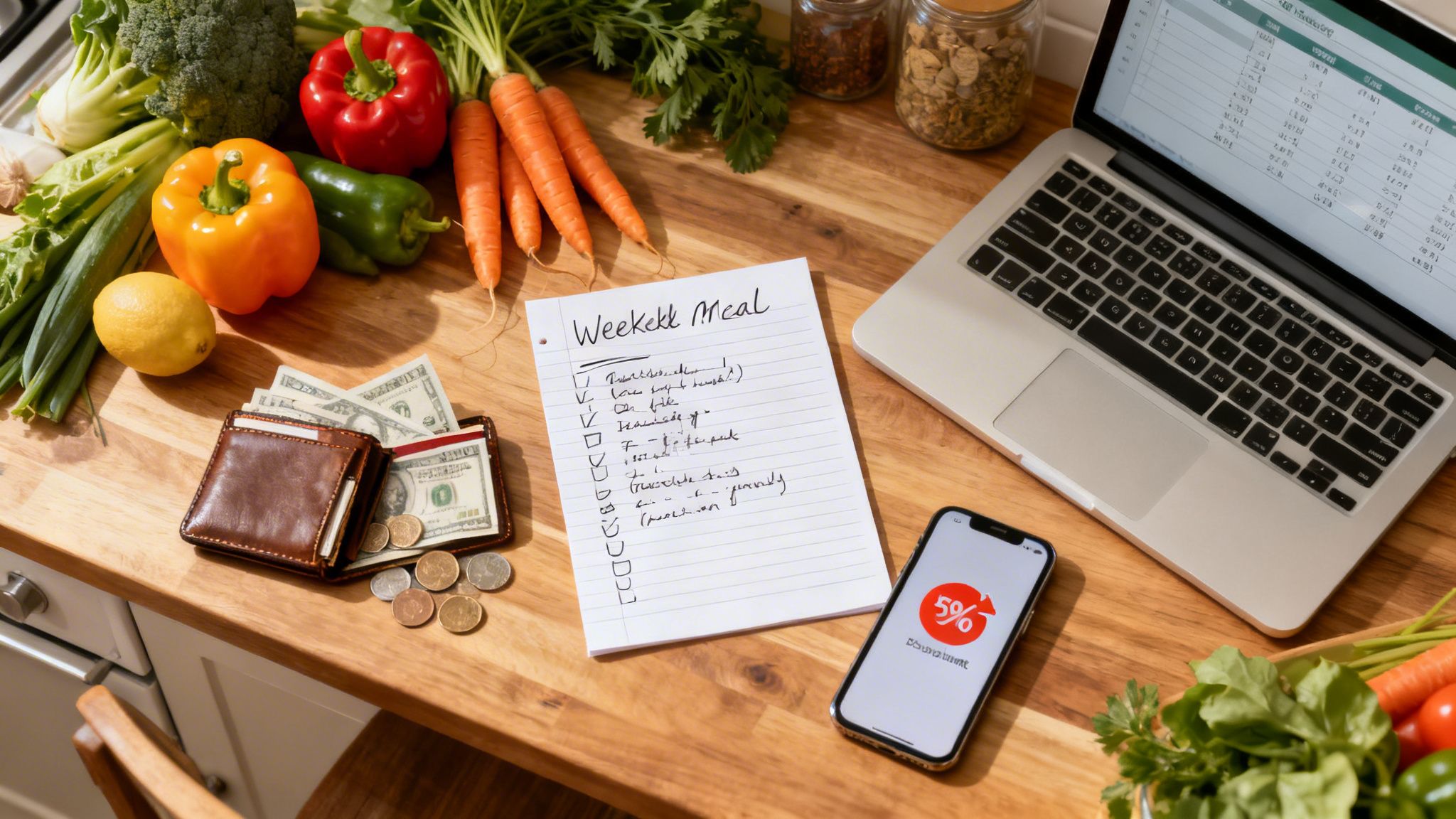
Feeling the financial pinch every time you tap your card at the grocery store? I get it. The secret to saving money on food isn't about becoming an extreme coupon-clipper overnight. It's much simpler: a bit of strategic planning, some savvy shopping, and efficient cooking.
This is all about making smart, intentional choices that free up your cash for, you know, actually enjoying student life.
Your Blueprint for Affordable Eating

Trying to manage food costs as a student can feel like a losing battle, but you can absolutely get control with a solid plan. Think of this guide as your blueprint for building better habits, one meal at a time. The real goal here isn’t just to spend less; it's to eat well without the constant financial stress.
And we're going way beyond the classic "just eat at home more" advice. We’ll get into real, actionable tactics that actually fit into a hectic uni schedule. We're talking about setting up a realistic budget, turning your grocery runs into money-saving missions, and making your kitchen the go-to spot for cheap, delicious food.
To make things easy, we’ve broken down the core strategies into four key pillars. Nailing these will completely change your food spending game.
The Four Pillars of Saving Money on Food
| Pillar | What It Means | Key Action |
|---|---|---|
| Budgeting & Tracking | Knowing exactly where your money is going so you can plug the leaks. | Set a weekly food budget and use an app to track every purchase. |
| Strategic Meal Planning | Deciding what you'll eat for the week before you shop. No more impulse buys. | Create a simple weekly meal plan and build a shopping list from it. |
| Savvy Shopping | Making smart choices at the supermarket to get more for less. | Compare unit prices, buy store brands, and always hunt for student discounts. |
| Efficient Cooking | Preparing and storing food to minimise waste and save time. | Master batch cooking, store leftovers properly, and use up what you have. |
By focusing on these four areas, you create a powerful system that puts you in control of your food spending, not the other way around.
Core Principles for Smarter Spending
Each pillar builds on the last, creating a foolproof system for managing your money.
It all starts with planning. This is your first line of defense against overspending. It means mapping out your meals for the week, making a shopping list you actually stick to, and checking your cupboards before you even think about heading to the store.
Next up is shopping smart. Once you're in the supermarket, your strategy shifts. This is about understanding how stores get you to spend more, comparing unit prices (the price per 100g is your best friend!), choosing store brands, and using every student discount you can find.
The final piece of the puzzle is what happens in your kitchen. Mastering batch cooking, storing leftovers correctly, and cutting down on food waste are game-changers. A huge part of this is implementing simple strategies to reduce food waste at home.
Honestly, the biggest money-saver for most students is cutting back on takeaways and eating out. Even small, consistent changes here can add up to hundreds of dollars in savings over a single semester.
When you look at the bigger picture, you see why these habits matter. Recent data shows that the food-away-from-home sector hit a mind-boggling $1.52 trillion. For students, that number screams opportunity. Every expensive takeaway you skip in favour of a home-cooked meal is a win for your bank account.
Build a Food Budget That Actually Works
Let's be honest, a "budget" sounds like a dirty word. It brings up images of spreadsheets, sad-looking salads, and saying "no" to everything fun. But for a student, a food budget isn't about restriction—it's about control. Without one, it's way too easy to get lost in a sea of small, unplanned purchases that mysteriously drain your account.
Think of it as your financial roadmap. It's about knowing exactly where your money is going so you can tell it where to go next.
First up, you need to play detective with your own spending. For just one week, track every single cent you spend on food and drink. Don't change a thing—just observe. Use a notes app, a beat-up notebook, or whatever is easiest. That morning coffee, the vending machine snack, the late-night pizza after a study session… write it all down.
After a week, you'll have a surprisingly clear snapshot of your habits. You might be shocked to see how much those "small" purchases really add up. This isn't about judging yourself; it's about getting some honest data to build a budget that's actually realistic for your life.
Set a Realistic Weekly Allowance
Okay, now that you have a baseline, you can set a real food budget. Take a look at your total income—whether it's from a job, student loans, or family—and figure out a weekly food allowance that feels manageable.
A good starting point is the 50/30/20 rule: 50% of your income goes to needs (rent, bills, food), 30% to wants (going out, new clothes), and 20% to savings. Groceries fall under "needs," but those frequent takeaways? They're probably dipping into your "wants" pile.
For example, if you have $150 left after rent and bills each week, you might allocate $50-$60 specifically for groceries and planned meals. This number isn't set in stone. Tweak it based on what your tracking revealed and what your goals are.
The key is to create a budget you can actually stick to. Setting an impossibly low number will only lead to frustration and giving up. Start with a reasonable goal and you can always tighten it up later as you get the hang of it.
Choose Your Budgeting Tool
Once you have your magic number, you need a simple way to keep an eye on things. You don't need fancy software. The best tool is genuinely the one you'll actually use.
- Spreadsheet: A simple Google Sheet or Excel file can work wonders. Just create columns for the date, item, category (groceries, coffee, takeaway), and cost. A basic
SUMformula will show you your running total at a glance. - Budgeting Apps: Apps like Mint or YNAB can sync with your bank account and automatically sort out your spending. Many even have features to set limits and ping you when you're getting close to your budget.
- The Envelope System: This one is super old-school but ridiculously effective. Withdraw your weekly food cash and stick it in a dedicated envelope. Once the cash is gone, it's gone. It makes your spending feel very real.
Whichever you choose, consistency is everything. A quick check-in each day takes less than a minute and keeps you honest. It's this simple habit that makes all the difference.
Of course, a modern student budget needs modern tools. Platforms that offer student-specific deals are a critical part of the puzzle.
Here’s a peek at the homepage for Student Wow Deals, which is all about curating discounts specifically for students.
This shows just how easy it can be to find deals on major expenses like food and drink, integrating savings directly into your weekly plan. Factoring in these kinds of resources from the start just makes your budget stretch that much further.
Time to Master the Supermarket

Ever walked into a supermarket for milk and walked out $50 poorer? You’re not alone. Supermarkets are designed to get you to spend, with shiny displays and sneaky layouts that lead you right to the priciest items.
Going in without a plan is a rookie mistake. But with a few simple tricks, you can flip the script and turn your weekly shop from a budget-buster into a money-saving mission. It’s all about shifting from a casual browser to a savvy, strategic shopper.
A Shopping List is Your Best Mate
Seriously, never shop without a list. This is your single best weapon against impulse buys and the marketing Jedi mind tricks that get you to buy that fancy cheese you don't need.
When your list is tied to your weekly meal plan, you have a clear purpose. You’re not just wandering aimlessly down the snack aisle; you’re on an efficient operation to grab what you need and get out with your wallet intact.
It's a proven strategy. Shoppers who stick to a list can spend up to 23% less than those who wing it. Think about what that adds up to over a whole semester!
Making a killer list is easy:
- Use your meal plan: Write down every single ingredient you need for the week's meals.
- Check what you've got: A quick scan of your fridge, freezer, and pantry is a must. No point buying another bag of rice if you've already got three.
- Group it up: Organise your list by store section (fresh produce, dairy, tinned goods, etc.). This stops you from zig-zagging around the store and getting tempted by things you don't need.
Outsmart the Supermarket Layout
Once you understand how supermarkets are set up, you can beat them at their own game. They're designed to make you walk past the most profitable items. The trick? Stick to the edges first.
The perimeter of the store is usually where the fresh, whole foods live—fruit, veggies, meat, and dairy. Hit these sections first, then only venture into the middle aisles for specific items on your list. That's where all the expensive, processed stuff hides.
Knowing your prices is also a huge advantage. Keeping an eye on what things should cost helps you spot a genuine bargain versus a clever marketing ploy. When you see non-perishables you use all the time on a deep discount, that’s your cue for stocking up on items in bulk—a guaranteed way to save cash in the long run.
Get Good at Reading Unit Prices
This is a non-negotiable skill for any budget shopper. The unit price—that tiny number on the price tag showing the cost per 100g or per kilo—is the secret to finding the true value.
Don't just assume the bigger package is better value. A huge box of cereal might seem like a deal, but the smaller home-brand version often has a lower cost per 100g. It takes two seconds to compare, and the savings really add up over time.
Make Smarter Choices on the Shelves
Beyond the big strategies, it's the small, consistent choices that make a massive difference to your grocery bill.
- Go for store brands: Honestly, in most cases, the supermarket's own brand is just as good as the big-name stuff but way cheaper. Pasta, tinned tomatoes, cheese—give them a shot.
- Eat with the seasons: Fruit and veg that are in season are always cheaper, fresher, and taste a million times better. A quick Google search will tell you what’s good right now.
- Look high and low: Brands pay big money for eye-level shelf space. Always scan the top and bottom shelves—that's where the real bargains are often hiding.
And don’t forget to cash in on being a student. Major supermarkets often have deals just for you. Always check for things like Woolworths student discounts to stack even more savings on top of your already-smart shopping.
Cook Smarter to Maximize Your Budget
Okay, so you've nailed your grocery shopping. But the real money-saving magic? That happens in your kitchen. This is where you turn those smart buys into delicious, cheap meals that honestly beat a takeaway any day of the week.
Learning just a few simple cooking and storage tricks is the secret to stretching every dollar and seriously cutting down on how much food you throw away.
It all kicks off with a little prep. If you can carve out just a couple of hours over the weekend for what people call batch cooking, you're setting yourself up for a week of easy, affordable meals. Trust me, this habit is your best defence against caving and ordering expensive food after a long day of lectures.
Master the Art of Batch Cooking
"Batch cooking" sounds way more intense than it is. Really, it's just cooking bigger portions of things to use later. Think of it as investing a bit of your time on Sunday to get a massive return in savings and convenience all week.
A brilliant way to start is by prepping versatile ingredients:
- Cook a big pot of grains: Quinoa, rice, or barley can be the base for salads, bowls, and sides for days.
- Roast a tray of veggies: Chuck some peppers, onions, sweet potatoes, and broccoli in the oven. Now you've got easy additions for pasta, wraps, or omelettes.
- Prep your protein: Grill a few chicken breasts, cook up a big batch of lentils, or hard-boil a dozen eggs for quick protein hits.
This simple approach leaves you with a fridge full of building blocks, making it dead easy to throw together a healthy meal in minutes.
The goal isn't to eat the exact same chilli for five days straight. It's about having components ready to go so you can mix and match. This keeps your meals interesting without having to start from scratch every single night.
Smart Food Storage Is a Game Changer
How you store your food has a massive impact on how long it lasts. Making it last longer is literally how you save money. For students, improper storage is probably one of the biggest reasons for food waste, but a few small tweaks can make a huge difference.
Your freezer is your absolute best friend here. It's basically a pause button for food, locking in freshness and stopping things from going off. Get into the habit of freezing leftovers from your batch cooking in single-serving portions. Before you know it, you’ll have a stash of homemade "ready meals" that are way cheaper and healthier than anything you can buy.
And you can freeze more than just leftovers:
- Bread: Stick the loaf in the freezer and just pop a slice in the toaster when you need one. No more mouldy bread!
- Herbs: Chop them up, put them in an ice cube tray with a bit of water or oil, and freeze for later.
- Fruit: Got overripe bananas? Peel, freeze, and use them for amazing smoothies.
Storing food properly in the fridge is just as crucial. Keep leafy greens crisp by wrapping them in a paper towel to soak up moisture. Veggies like potatoes and onions should be in a cool, dark cupboard, not the fridge. These tiny habits stop you from literally throwing money in the bin.
Get Creative and Fight Food Waste
That random half-an-onion, those last two carrots, that spoonful of tomato paste… they don't have to be binned. Learning to use up all your odds and ends is a core skill for any budget-conscious cook. This is your chance to get creative and turn what looks like waste into a genuinely tasty meal.
Try to have a "use-it-up" meal once a week, maybe the night before your next food shop. A stir-fry, a soup, a frittata, or a pasta sauce are all perfect for this—they're basically designed for using up leftover veg and little bits of protein.
For those times when even that feels like too much effort, a meal kit can be a surprisingly good alternative to a takeaway, especially with a discount. If you like the idea of having structured, easy-to-cook meals delivered, check out something like the HelloFresh student discount code to see if it fits your budget. It can be a great way to learn new recipes while keeping costs under control.
Get Smart with Deals and Discounts
If you’ve got a smartphone, you’ve got a money-saving machine right in your pocket. Honestly, ignoring the world of digital deals, loyalty cards, and student discounts is like choosing to pay full price when you absolutely don't have to. Let's put that tech to good use.
It's not about becoming an extreme coupon-clipper. It's about a few smart downloads that can seriously slash your grocery bill and make the occasional takeaway feel less like a splurge.
Tap Into Savings Just for Students
Being a student has its perks, and a big one is access to discounts most people can't get. Certain platforms do all the hard work for you, gathering these deals in one spot so you don't have to go hunting for them.
Just check out the kind of offers you can find on Student Wow Deals – deals on everything from Uber Eats to your local cafe.

The key is making it a habit. Before you buy anything, just take a quick second to check for any student food and drink discounts available. A few seconds of your time could easily save you 10-20% on a meal. Think about how that adds up over a semester!
Your Phone Is Your Best Friend for Savings
While student-specific platforms are gold, don't stop there. There’s a whole universe of apps designed to help anyone save cash on food.
Here’s a quick look at some of the essential apps every student should have on their phone.
Essential Money-Saving Apps for Students
| App Category | Example Apps | How It Saves You Money |
|---|---|---|
| Supermarket Loyalty | Woolworths Rewards, Flybuys | Unlocks member-only prices, offers personalised digital coupons, and lets you earn points for cash off future shops. A no-brainer. |
| Cashback Services | ShopBack, Cashrewards | You get a percentage of your money back on purchases you were already making, from groceries to takeaways. It feels like finding free money. |
| Food Waste Reduction | Too Good To Go, OLIO | Connects you with local cafes and restaurants selling leftover food at a huge discount. Perfect for cheap, high-quality meals and snacks. |
Each of these apps tackles savings from a different angle. When you start combining them—using a cashback app to pay for groceries you bought with your loyalty card—the savings really start to stack up.
Food waste apps like Too Good To Go are a total game-changer. You can snag incredible "magic bags" of food from bakeries or cafes at the end of the day for just a few dollars. It’s a win for your wallet and a win for the planet.
This simple flowchart shows how a little bit of planning can stop you from literally throwing money in the bin.
By making a conscious choice to cook, store, or eat what you have, you prevent food and cash from going to waste. Pair that mindset with a few good apps, and you've got a seriously powerful system for saving money.
Common Questions About Saving on Food
Even when you've got a solid game plan, life happens. Friends invite you out, you’re suddenly swamped with coursework, or you’re just too shattered to even think about cooking. Let's tackle some of the most common questions that come up when you're figuring out how to save money on food.
Think of this as your go-to guide for those real-life moments, so you can handle them without blowing your budget.
Is It Possible to Eat Out with Friends on a Budget?
One hundred percent! You don't need to turn into a social hermit just to save a few quid. The secret is being a bit more strategic when you go out. It’s all about making smarter choices before you even step out the door.
For starters, why not suggest a different kind of catch-up? Instead of a pricey restaurant dinner, you could meet for a coffee, go for a walk, or even host a potluck where everyone chips in with a dish. It shifts the focus from spending cash to just spending quality time together.
But if you are heading to a restaurant, try these moves:
- Eat beforehand: Seriously, have a small, protein-packed snack before you leave. You won't be ravenous when you arrive, making it way easier to just order a cheaper appetiser or side instead of a full-blown main.
- Check the menu online: Most restaurants have their menus up on their website. A quick scan before you go helps you spot the budget-friendly options without feeling rushed at the table.
- Skip the drinks: This is a big one. Drinks, especially alcohol, are where restaurants make a killing. Sticking with tap water can easily save you $10-$20 on your bill.
The goal isn't to ghost your mates; it's about being the one who suggests the smart, budget-friendly ideas. You'll probably find they're just as keen to save money as you are.
What Are the Best Quick and Cheap Meals?
It's late, you're starving, and the temptation to order an expensive takeaway is real. Your best line of defence is having a few lightning-fast meals in your arsenal. We're talking about meals you can whip up in 15 minutes or less, using stuff you should always have in your cupboard.
Here are a few student-approved classics:
- Pimped-out ramen: Ditch the sad little flavour packet. Take that cheap block of instant noodles to the next level by throwing in a soft-boiled egg, a handful of frozen veg, and a splash of soy sauce.
- The ultimate omelette: Eggs are a true budget superhero. Whisk two or three with a bit of milk, then toss in whatever you've got—leftover cheese, chopped-up veggies, or bits of ham.
- Quick pasta aglio e olio: This classic Italian dish is literally just pasta, garlic, olive oil, and a pinch of chilli flakes. It's ridiculously cheap, incredibly fast, and always hits the spot.
Having these simple, cheap recipes up your sleeve makes it a no-brainer to sidestep the takeaway trap and keep your food savings on track.
How Can I Save Money When I Don't Have a Big Freezer?
Tiny freezer space is the classic student housing struggle, but it doesn't mean you can't save money. You just have to change your approach from massive batch cooking sessions to smarter, smaller-scale food prep.
Forget freezing five identical portions of chilli. Instead, focus on freezing versatile, space-saving ingredients.
For example, you can freeze leftover tomato paste, chopped herbs, or pesto in ice cube trays. They're perfect little flavour bombs that take up hardly any room. You can also freeze single portions of cooked chicken or mince in small freezer bags—just press them flat to maximise space.
Another great trick is what I call "component prepping." Instead of cooking five full meals, just cook the individual parts. Make a big batch of rice or quinoa to keep in the fridge for 3-4 days. Roast a whole tray of veggies you can add to different meals all week. It gives you all the time-saving perks of batch cooking without needing a giant chest freezer.
Ready to unlock hundreds of exclusive deals and make your student budget go further? Join Student Wow Deals today for free and get instant access to discounts on food, fashion, tech, and more from top brands. Start saving now at https://studentwowdeals.com.