


Furnishing your college place is all about being smart, not just hunting for the cheapest price tag. It’s a balancing act: figuring out what you actually need versus what you want, setting a budget you can live with, and prioritizing pieces that do double-duty to save space and cash. Get this right, and you’ll have a comfortable, functional space without the financial headache.
Your Smart Start to Furnishing on a Student Budget
Moving into a dorm or your first apartment is a huge milestone, but staring at those empty walls can feel pretty daunting. With tuition and rent eating up most of your cash, every dollar has to count. In some states, the cost of just food and housing can actually be more than tuition, which makes budgeting for stuff like furniture an absolute must.
The real trick isn’t just buying the cheapest thing you can find. It’s about making choices that give you value and won’t fall apart in a month. This means you need a solid game plan before you even think about hitting the shops to protect your wallet from impulse buys and clutter.
Distinguish Needs From Wants
First things first: you need to draw a hard line between the absolute essentials and the nice-to-haves. A bed, a desk, and a chair? Those are your non-negotiables. That cool decorative bookshelf or extra seating for when friends come over can definitely wait.
Try making a tiered list to get your priorities straight:
- Day One Essentials: These are the things you need from the second you move in to live and study. Think bed/mattress, a proper desk, a supportive chair, and a lamp.
- Week One Comforts: Once you’ve got the basics, add items that make life a little easier. This could be a small dresser or a closet organizer, a bedside table, and maybe a mirror.
- Month One Personal Touches: Now for the fun stuff. This is where decor, throw pillows, extra storage bins, or a small rug come in to make the space feel like your own.
This approach stops you from blowing your whole budget before you’ve even got a place to sleep.
Set a Practical Student Budget
Alright, you know what you need. Now, how much can you actually spend? Research shows that the average student aims to spend less than $200 on dorm furnishings. That might sound crazy tight, but with some clever planning, it’s totally doable.
Setting a firm budget is the single most important step in finding affordable furniture for college students. It forces you to be resourceful and prioritize function over fleeting trends, preventing debt before the semester even begins.
Remember to think beyond the price tag. You’ve got to account for delivery fees, taxes, or even the cost of renting a U-Haul for that perfect secondhand find. Building these costs into your budget from the get-go saves you from nasty surprises.
Tons of student-friendly retailers have programs to help with these costs. For example, knowing the details of an IKEA student discount can help you shave off costs on both the furniture and the delivery. A little planning like this makes a small budget stretch way further, ensuring you get what you truly need without going broke.
Figure Out Your Space and What You Actually Need
Before you even think about spending money, you need to get the lay of the land. Just jumping into furniture shopping without measuring your room is like going grocery shopping when you’re starving—you’re going to make some bad, expensive decisions.
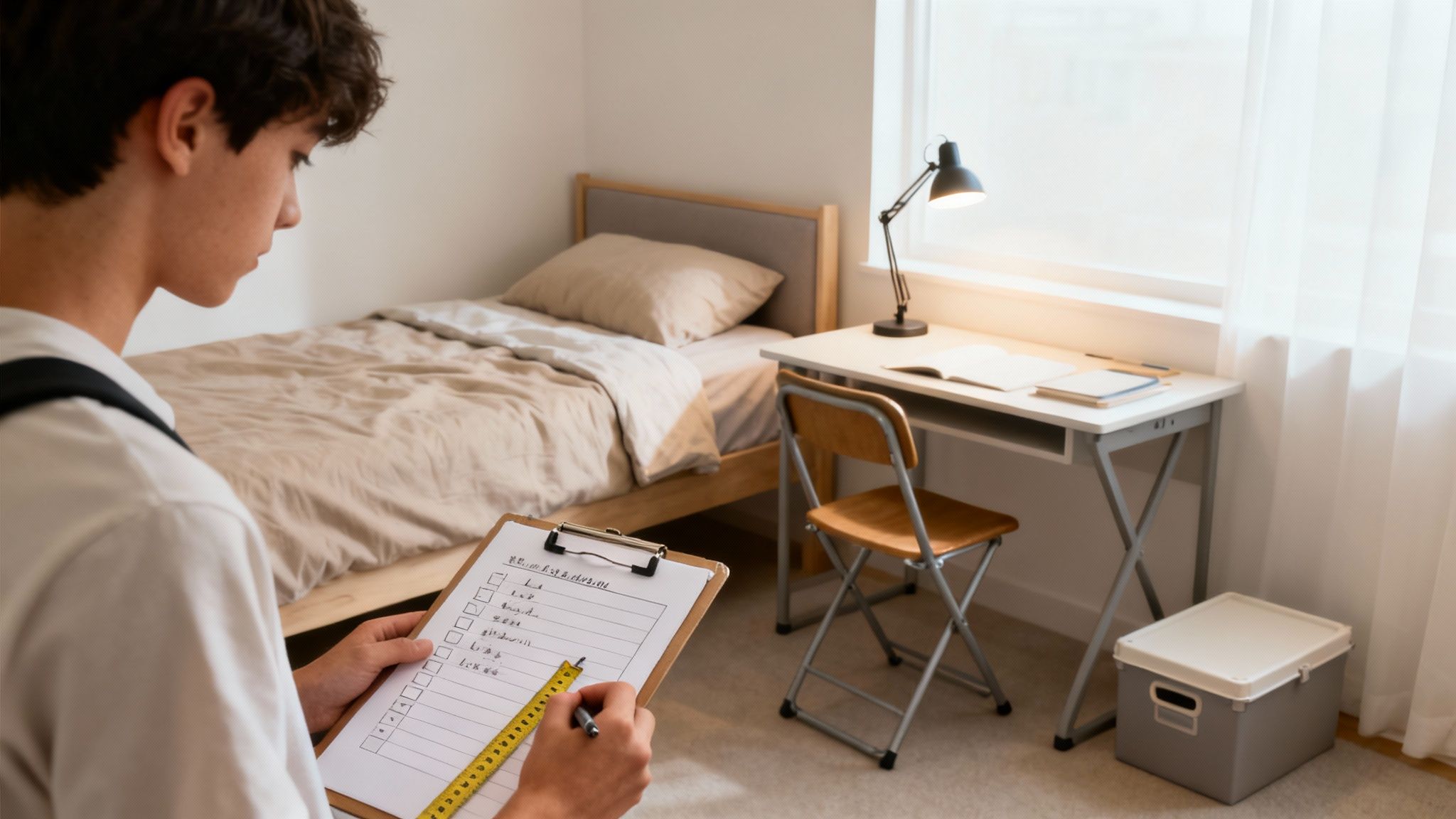
So, grab a tape measure. Seriously. Get the basics down first: the length and width of the room, ceiling height, and the size of windows and doorways. These numbers are your new best friends. They’ll be the ones to tell you if that awesome loft bed you found online is actually going to fit or if it will completely block your only window. Don’t forget to measure the weird spots, too, like that tight corner or the sliver of wall next to the door.
Sketch Out a Quick Floor Plan
You don’t need to be an architect for this. A quick sketch on a piece of paper or a napkin is perfect. Just be sure to mark where the doors, windows, and—this is a big one—the electrical outlets are. Trust me, there is nothing more frustrating than building a brand new desk only to realize the nearest outlet for your laptop and lamp is clear across the room.
A simple floor plan lets you play around with where things could go. You can see if there’s enough space to actually pull your desk chair out without it ramming into your bed. This little bit of prep work can save you from the massive headache of buying furniture that’s just too big or totally impractical for the room you have.
Taking the time to map your layout and find your outlets is non-negotiable. It turns furniture shopping from a wild guessing game into a smart, strategic mission where every piece has a purpose and a place.
With school and rent costing more than ever, you have to be smart with your cash. The data shows that the average student budgets around $192 for dorm stuff, which is a tiny 14% slice of their total back-to-school spending. That budget means every choice has to count, like picking a $70 flat-pack desk so you still have money left for bedding and plates. You can get more details on how students are managing their money from these student spending insights.
When money is this tight, you can’t afford to buy something that doesn’t fit. A clear plan is everything.
Make a Tiered Shopping List
Okay, now that you know your space inside and out, it’s time to figure out what you need to buy. Not all furniture is created equal, especially on day one. Breaking your list down into tiers makes sure you get the absolute must-haves first, before your budget gets eaten up by the “nice-to-haves.”
Think of it like a move-in plan, but for your stuff. It’s a great way to manage your money and avoid the stress of trying to buy and build everything all at once. Here’s how I like to break it down.
Tier 1: The ‘Day One’ Must-Haves
These are the non-negotiables. You can’t really sleep, study, or function without them from the second you get your keys.
- A Place to Sleep: This could be a simple mattress and frame, or even just a really good mattress topper if you’re stuck with a standard-issue dorm bed.
- A Surface for Study: Your desk is command central. It needs to be solid enough to hold your laptop, textbooks, and probably a few too many coffee cups.
- A Supportive Chair: You’re going to be parked here for hours on end. A decent ergonomic chair isn’t a luxury; it’s an investment in your back and your grades.
Tier 2: The ‘Week One’ Comforts
Once the basics are covered, you can start thinking about the things that make a space feel less like a box and more like a room. This is all about organization and comfort.
- Essential Storage: A small dresser, some closet organizers, or those roll-out under-bed bins are clutch for keeping your room from turning into a total disaster zone.
- Good Lighting: A desk lamp is a must for late-night study sessions if you want to avoid eye strain. A floor lamp can also make the whole room feel cozier.
Tier 3: The ‘Month One’ Personal Touches
Alright, you’ve survived the first few weeks. Now you can start adding the pieces that show off your personality and make the place truly feel like yours.
- Extra Seating: A small armchair or a cool storage ottoman gives your friends somewhere to sit that isn’t your bed.
- Decor: This is the fun stuff. A rug, some posters, or a few plants can completely transform a boring, generic room.
- Convenience Items: Think about a small bedside table so your phone isn’t on the floor, or a little bookshelf for things other than textbooks.
This tiered approach is a game-changer when you’re hunting for affordable furniture for college students. It forces you to line up your spending with your immediate needs, guaranteeing you’ve got a functional place to live and study right from the get-go.
Uncovering the Best Deals on Student Furniture
Finding great furniture deals is an art form, and for a student on a budget, it’s a survival skill. The big-box stores are just the beginning; the real treasures are usually tucked away where most people don’t think to look. If you can master the hunt, you’ll be able to furnish your entire space without blowing up your bank account.
The financial pressure on students is no joke. Furniture is a surprisingly big part of the back-to-college budget, which is why you have to get smart about how you shop. For the 2023 school year, students and their families in the United States planned to spend an average of $1,364.75 per person on college supplies. About $192.40 of that was just for dorm or apartment furnishings, which adds up to a staggering $12.2 billion spent on furniture and decor. You can dig into the numbers in this report on back-to-college spending.
Mastering Online Marketplaces
Your first stop for scoring secondhand deals should always be online marketplaces. Platforms like Facebook Marketplace are absolute goldmines for everything from desks to dressers, and you’re usually buying from people right in your own neighborhood.
But you can’t just browse aimlessly. You need a strategy:
- Use Specific Search Terms: Don’t just search for “desk.” Try something like “small student desk” or “wood writing desk” to filter out the noise.
- Set Up Alerts: Create notifications for the items you’re hunting for. That way, you’ll be the first to know when a good deal pops up.
- Negotiate Politely: Most sellers expect a little haggling. Start with a reasonable offer that’s a bit below their asking price. A simple, “Would you be willing to accept $40?” works way better than a lowball offer.
Always remember to inspect the item in person before you hand over any cash. Give it a good wobble, check that drawers slide out smoothly, and don’t be shy about asking questions.
This decision tree gives you a great roadmap for what to buy and when, helping you focus your deal-hunting on what matters most, right away.
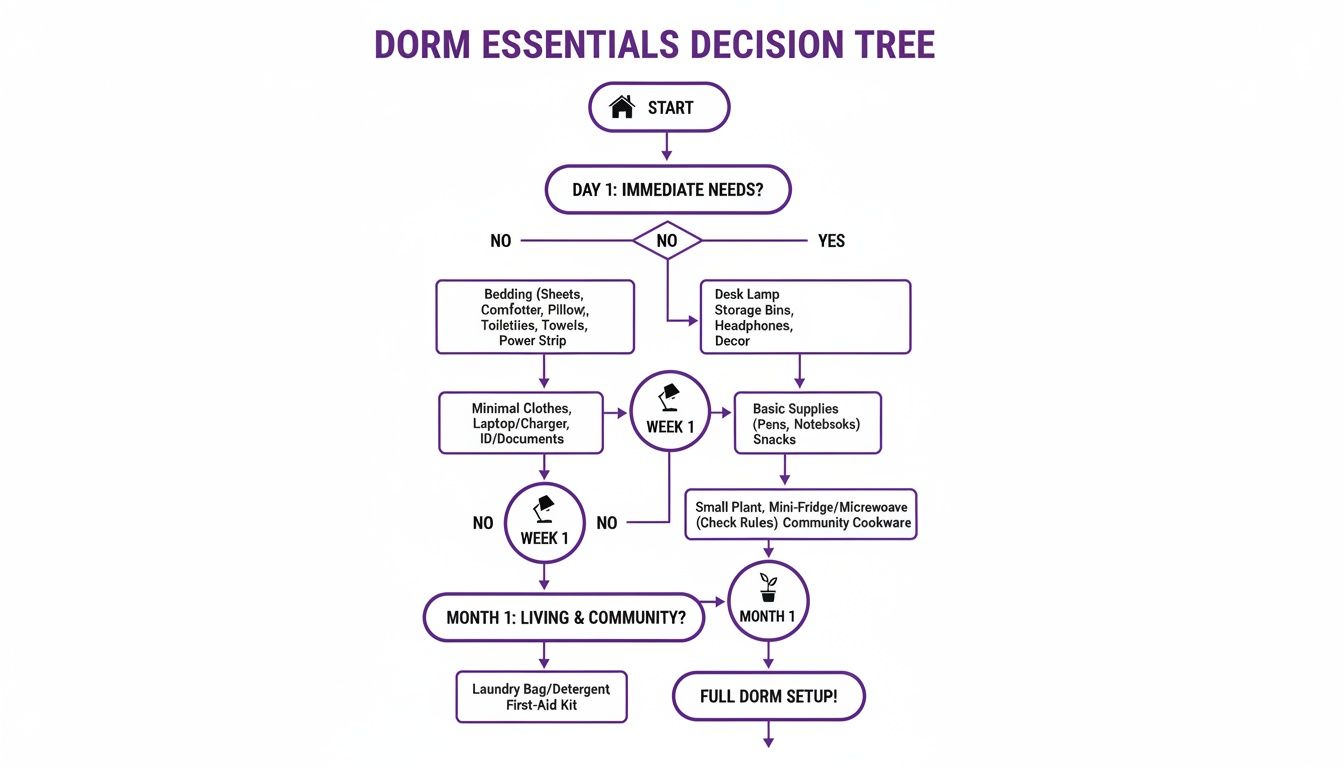
As you can see, locking down the day-one essentials like your bed is priority number one. You can worry about the decor and comfort items later.
The Power of Local and Student-Specific Deals
Don’t get so glued to your screen that you forget to look offline. Thrift stores and consignment shops are fantastic for finding sturdy, unique pieces for way less than they originally cost. But the real jackpot? End-of-semester move-out.
When students graduate or head home for the summer, they often leave behind almost-new furniture they can’t take with them. Keep an eye out for campus-wide yard sales, or just take a drive through student-heavy neighborhoods during move-out week. You’ll be shocked at what you can find sitting on the curb for free.
The best affordable furniture for college students often comes from other students. Tapping into the campus cycle of moving in and out is the ultimate budget hack for scoring quality items for cheap or even free.
Another trick is to use your student status to get exclusive discounts on new stuff. Lots of brands offer special deals just for students, but they don’t always advertise them on their main sites. That’s where discount platforms come in handy. For instance, finding a Wayfair student discount can make that new desk chair or bookshelf a whole lot more affordable.
A Student’s Guide to Furniture Sourcing
Here’s a breakdown of the top furniture sources for students, comparing cost, quality, and convenience to help you decide where to focus your search.
| Source | Typical Cost | Pros | Cons | Best For |
|---|---|---|---|---|
| Online Marketplaces | $ | Huge selection, negotiable prices, local pickup. | Quality varies, potential for scams, requires transport. | Budget-conscious students looking for specific used items. |
| Thrift Stores | $ | Extremely low prices, unique finds, supports charity. | Hit-or-miss inventory, items may need cleaning/repair. | Finding one-of-a-kind decor and sturdy basics. |
| Student “Move-Out” | Free – $ | Often free, items are already on/near campus. | Seasonal (end of semester), competitive, first-come-first-served. | The ultimate budget hacker who isn’t afraid to hunt. |
| Retailer Discounts | $$ | New items, warranties, student-specific savings. | Higher initial cost than secondhand. | Securing key new items like mattresses or ergonomic chairs. |
| Furniture Rental | $$$ | Zero hassle (delivery/setup included), flexible for short-term. | Most expensive option over the long term. | International students or those in temporary housing. |
Each option has its place, and the smartest strategy is often a mix-and-match approach.
Considering Furniture Rental Services
For some students, buying furniture just doesn’t make sense. If you’re an international student here for a semester or living in a short-term apartment, furniture rental services are a game-changer.
Companies like CORT or Fernish will deliver and set up everything you need, and when you’re ready to leave, they come and pick it all up. No U-Hauls, no begging friends for help, no trying to sell a desk on Marketplace a week before you move.
While renting will cost you more over a four-year degree than buying would, the convenience can be worth it. It’s perfect for anyone who values flexibility and a hassle-free experience above all else.
Choosing Multi-Functional Furniture That Saves Space
Let’s be real: in a cramped dorm or a shared apartment, every single square inch of floor space is prime real estate. To win the battle against clutter, you have to think smarter, not bigger. That means choosing furniture that pulls double or even triple duty. A piece that only does one thing is a luxury you probably can’t afford, at least not space-wise.
Multi-functional furniture isn’t just a trend; it’s a strategic necessity for student life. It’s the key to getting the function of two or three pieces for the footprint of just one, helping you create a space that feels open and organized, even when it’s tiny.
Embrace the Power of Double-Duty Design
The best affordable furniture for college students almost always has a hidden talent. Your mission is to find pieces that solve multiple problems at once. Instead of buying a separate coffee table and an extra chair, find something that combines both.
Here are a few multi-functional champions I’ve seen work wonders:
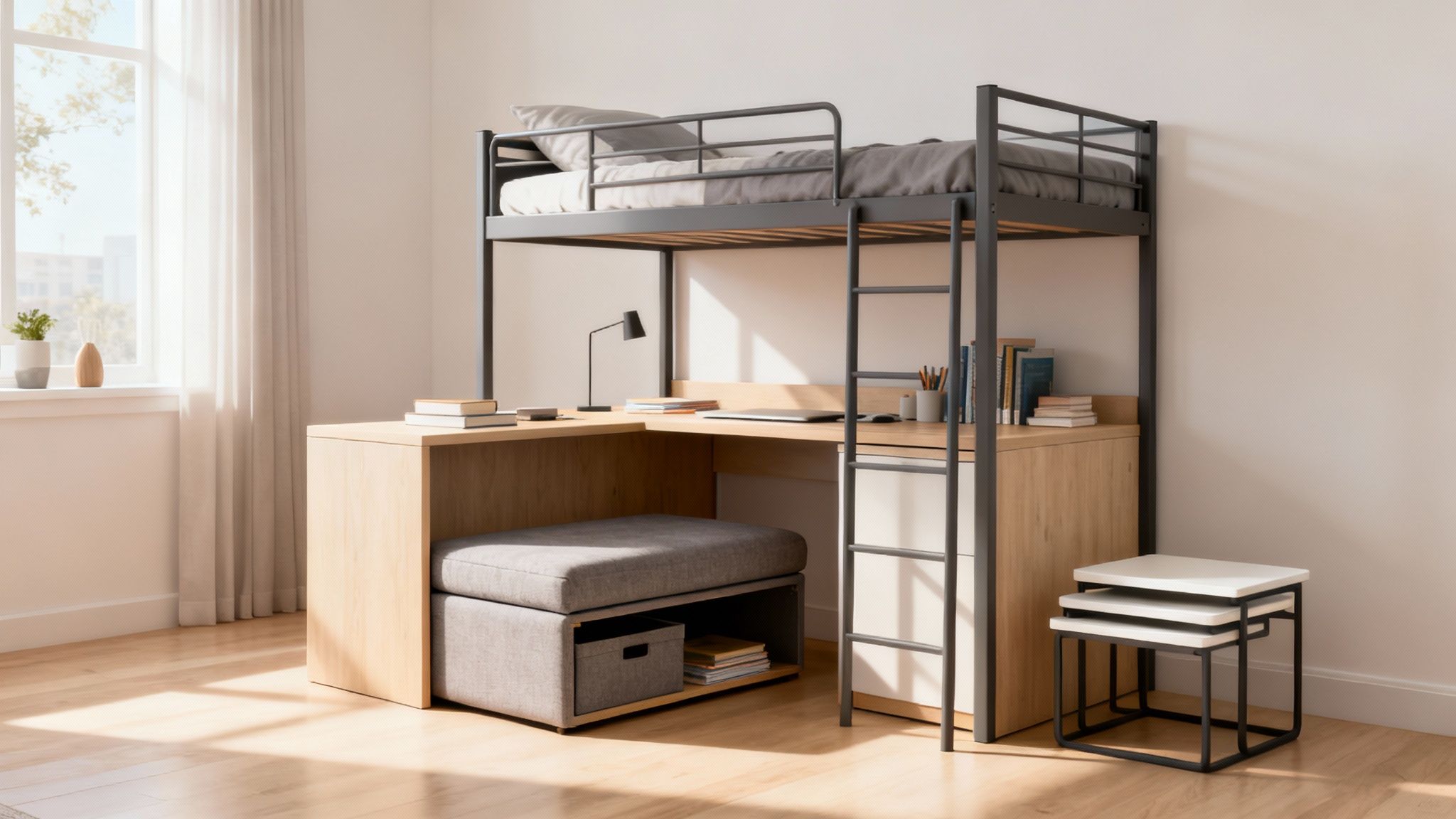
- Storage Ottomans: These are the true MVPs of small-space living. They’re a place to stash textbooks, blankets, or snacks, but they also work as a footrest, an extra seat for a friend, or even a makeshift coffee table.
- Loft Beds: This is the ultimate space-saving hack. By lifting your bed off the floor, you instantly create a whole new zone underneath. It’s the perfect spot for a desk, a cozy reading nook with a beanbag, or a small dresser.
- Nesting or Stackable Tables: Instead of one bulky side table, a set of nesting tables gives you multiple surfaces when you need them and tucks away neatly when you don’t. Perfect for study groups or when friends visit.
- Futons or Daybeds: The classic student solution for a reason. It’s a couch for hanging out during the day and easily converts into a bed for overnight guests, saving you from buying a separate air mattress that will inevitably get a hole in it.
Finding stores with the best furniture for small spaces can be a game-changer, offering stylish and functional options designed for the challenges of a student-sized room.
Inspecting Furniture Like a Pro
Whether you’re buying a brand-new flat-pack desk or scoring a secondhand dresser off Facebook Marketplace, you need to know what you’re looking at. Cheaply made furniture won’t survive a single semester, let alone four years. A quick inspection can save you from wasting money on something that will fall apart the first time you move it.
Before you buy, run through this quick checklist:
- Give It a Wobble: This is the most basic test. Push gently on the top and sides. If it sways or feels unstable, walk away. Solid construction means it should feel sturdy and grounded.
- Check the Joints: Look at how the pieces are held together. Screws, dowels, and dovetail joints are good signs. If it’s mostly held together by staples and glue, that’s a major red flag.
- Test Drawers and Doors: Open and close every drawer and cabinet door. They should move smoothly without sticking or catching. Make sure they line up correctly when closed.
- Examine the Material: Is it solid wood, or is it particleboard with a thin veneer? Particleboard is common in budget furniture, but check that the veneer isn’t peeling or bubbling, especially at the edges.
A piece of furniture is only a good deal if it lasts. Taking 60 seconds to check for wobbly legs or sticky drawers can be the difference between a smart purchase and a semester-long headache.
Remember, students prioritize core bedroom items. In the student furniture market, essentials like beds, wardrobes, and basic storage make up the largest share. This focus on durability and space-efficiency means you can often find good deals on the pieces you need most.
Knowing When to Splurge and When to Save
Not everything you own needs to be built like a tank. A smart budget strategy is all about investing a little more in high-use items while saving on things that are less critical. You’re trying to balance cost with comfort and longevity.
Here’s a quick guide on where to put your money:
- Invest More Here: Your desk chair and mattress should be your top priorities. You’ll spend hundreds of hours sitting and sleeping on them. An ergonomic chair and a supportive mattress are investments in your health and your grades. Trust me on this one.
- Go for the Cheaper Option: For things like decorative bookshelves, side tables, or a TV stand, you can absolutely get away with more basic, budget-friendly options. These pieces don’t endure the same daily wear and tear, so their structural integrity isn’t as crucial.
Managing Delivery, Assembly, and Personalization
Alright, so you’ve scored the perfect furniture. Huge win. But now comes the real challenge: getting those pieces into your room, putting them together, and making them look like they actually belong to you. This is where the real work begins, but don’t sweat it. Think of it as a classic college rite of passage.
Successfully wrestling a secondhand dresser up three flights of stairs or decoding the hieroglyphics of a flat-pack desk manual is something we’ve all been through. It just takes a bit of planning, a few basic tools, and a healthy dose of patience. Let’s break down how to nail it without losing your mind (or your security deposit).
Getting Your Furniture Home
You found the perfect desk on Facebook Marketplace for $20. The only catch? It’s across town and definitely not fitting in your roommate’s sedan. This is a super common hurdle when you’re hunting for deals, but it’s totally solvable.
Here are your best bets for moving bigger pieces:
- Hourly Truck Rentals: Places like U-Haul or even local hardware stores will rent you a pickup truck or a small van by the hour. For a quick trip, this is incredibly cost-effective, especially if you can split the rental cost with a friend who also needs to move something.
- App-Based Delivery: Check out apps like Dolly or TaskRabbit. They connect you with local people who have trucks and are willing to help out. You can book someone for a single-item delivery, which is often way cheaper than what a traditional moving company would charge.
- Befriend Someone with a Truck: Never, ever underestimate the power of friendship and a pizza bribe. If you have a pal with a larger vehicle, offering to cover their gas and buy them lunch is usually the cheapest and easiest way to go.
Your Survival Guide to Furniture Assembly
Flat-pack furniture is a student budget’s best friend, but those wordless instruction manuals can feel like a cruel joke. Before you even tear open the box, a little prep can make the whole process way less frustrating.
First, get your tools ready. That tiny Allen wrench they give you is rarely enough to get the job done right. A basic toolkit with a multi-bit screwdriver, a hammer (or rubber mallet), and maybe a pair of pliers will make your life infinitely easier. If you’re building out your first toolkit, checking for a The Home Depot student discount can help you snag the essentials without spending a ton.
Next, clear a big workspace on the floor and lay out all the pieces. I’m serious about this part: match every single screw, dowel, and panel to the inventory list before you start building. This simple check catches missing parts early and stops you from using the wrong screw in the wrong place—a classic mistake that can wreck the whole piece. If the idea of assembling it all yourself fills you with dread, don’t forget you can always call in the cavalry and hire professional furniture assembly services.
Pro Tip: When you’re putting it all together, only tighten the screws to about 80% until every part is connected. This leaves you a little wiggle room for alignment. Once it’s all in place, go back and tighten everything down completely for a sturdy, wobble-free finish.
Making Generic Furniture Your Own
Your space should look like you, not a page from a retailer’s catalog. This is the fun part where you get to be creative and make your dorm or apartment truly feel like home. The best part? It doesn’t have to be expensive or permanent.
Here are a few simple, budget-friendly ideas:
- Removable Wallpaper or Contact Paper: This stuff is a game-changer for bland surfaces. Use it to cover a plain desktop, the back panel of a bookshelf, or the drawer fronts on a boring dresser. It adds instant personality and peels right off at the end of the year.
- Upgrade the Hardware: Swap out the standard, boring knobs on a dresser or nightstand for something more unique. You can find cool, cheap hardware at places like Home Depot, Anthropologie, or even thrift shops. It’s a five-minute fix that makes a piece look way more expensive.
- A Quick Coat of Paint: For a thrifted wooden piece that’s seen better days, a fresh coat of paint works wonders. Just be sure to ask for permission if you’re in a dorm. For an apartment, this is an easy way to match furniture to your color scheme.
Got Questions About College Furniture? We’ve Got Answers.
Stepping into the world of furnishing your own place for the first time can feel like a pop quiz you didn’t study for. Where should you spend your tiny budget? Is that flat-pack bookshelf from IKEA a good idea, or should you hunt for a secondhand gem? It’s a lot to figure out.
Don’t sweat it. We’ve rounded up the questions we hear all the time from students and laid out some straightforward, no-nonsense answers. Think of this as your cheat sheet to furnishing your space without the move-in day meltdown.
Where Should I Actually Spend My Money?
When cash is tight, you have to play it smart. If you’re going to invest in anything, make it your bed and your desk chair. Seriously. You’re going to spend a huge chunk of your life sleeping and an equally huge chunk studying (or at least, you’re supposed to). Your back and your grades will thank you.
A decent mattress—or even just a really good mattress topper—can make a world of difference on a stiff, standard-issue dorm bed. And an ergonomic desk chair? That’s not a luxury; it’s a necessity for surviving those late-night cram sessions without feeling like you’re 90 years old the next morning. These two items give you the biggest bang for your buck when it comes to your well-being.
Is It Really Possible to Find Free Furniture?
Finding free furniture isn’t just a myth your parents tell you about the good old days. It just takes a little hustle and good timing. The key is to keep your eyes peeled on a few key online spots.
- Facebook Marketplace: This is gold. Just filter your search for items listed at $0. You’ll be shocked at what people will give away just to avoid the hassle of moving it themselves.
- Local Buy Nothing Groups: These hyper-local community groups are amazing. People post things they no longer need, and it’s all about neighbors helping neighbors.
- Craigslist “Free” Section: It’s an old-school classic for a reason. Things go fast, so be ready to message quickly and always, always arrange to meet in a safe, public spot.
Pro tip: The absolute best time to score free stuff is during move-out week at the end of the semester. Cruise through student-heavy neighborhoods and you’ll find desks, shelves, and lamps left on the curb by students who can’t lug it all home.
And don’t forget to just ask around! Tell your family, friends, and neighbors you’re on the hunt. You never know who has a perfectly good nightstand collecting dust in the basement that they’d be happy to see go to a good home.
Should I Buy New Flat-Pack Stuff or Go for Used Furniture?
Ah, the classic debate. The real answer? You probably need a bit of both. They each have their pros and cons, and a hybrid approach is usually the smartest way to go.
New flat-pack furniture is a breeze to transport—it’ll fit in almost any car—and you get that fresh-out-of-the-box feeling. The downside? It can be a nightmare to assemble (have your patience and a friend ready), and let’s be honest, it’s not always built to last.
On the flip side, solid wood furniture from a thrift store or online marketplace is often cheaper and way more durable. But it’s also heavy, a pain to move, and might come with some battle scars.
Try a Smart Hybrid Strategy
- Go Used For: The heavy hitters like your desk or dresser. These are the pieces you want to be sturdy and reliable.
- Buy New For: Your mattress (for obvious hygiene reasons!), a simple, lightweight bed frame, or that perfectly-sized bookshelf you know will fit in that weird corner of your room.
What Are the Essentials Everyone Forgets?
Okay, you’ve got the bed, desk, and chair. You’re done, right? Not so fast. Two things students almost always forget are good lighting and smart storage. Your room will feel a thousand times better with them.
That single, harsh overhead light in most dorms is just depressing. It’s terrible for studying and even worse for just chilling out. A good desk lamp is a must-have to save your eyes, and a cheap floor lamp can make the whole room feel cozier and more like a real home.
When it comes to storage, you have to think vertically.
- Over-the-door organizers: A lifesaver for shoes, snacks, or toiletries without taking up any floor space.
- Tall, skinny bookshelves: They give you tons of storage but have a tiny footprint.
- Under-bed storage bins: Absolutely essential. Shove your out-of-season clothes or extra textbooks under there and keep your floor clear.
These little things make a massive difference in keeping a small space from feeling cramped and chaotic.
Ready to start saving on more than just furniture? Student Wow Deals is your go-to source for exclusive discounts on everything from food and fashion to tech and travel. Join our community for free and unlock hundreds of deals to make your student life more affordable.